

The hardest of all is learning to be a well of affection, and not a fountain; to show them we love them not when we feel like it, but when they do.
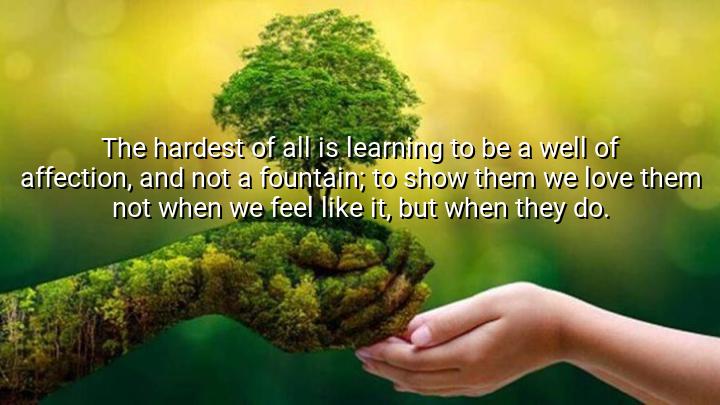




The quote by Nan Fairbrother explores the challenge of love and affection in human relationships. She contrasts being a well of affection with being a fountain, emphasizing that true love is not about spontaneous displays or giving only when we feel inclined. A well represents a deep, steady, and reliable source, while a fountain suggests something that gushes unpredictably. Fairbrother is pointing out that authentic love requires consistency and self-discipline rather than mere emotional impulses.
Fairbrother highlights the importance of responding to others’ needs rather than our own timing. Learning to show love not when it is convenient, but when it is needed, is the essence of relational maturity. This idea reflects a shift from self-centered affection to other-centered love, where empathy and awareness guide actions. It challenges individuals to consider the feelings and expectations of those they care for, rather than simply acting on their own moods.
The origin of this insight comes from Fairbrother’s work in family and child development, where she explored the dynamics of nurturing, guidance, and emotional growth. She understood that relationships—whether between parents and children, partners, or friends—thrive when love is consistent, reliable, and attuned to the needs of others. Her use of metaphor makes this psychological and ethical principle both memorable and vivid.
Ultimately, the quote teaches that mature love is patient, deliberate, and rooted in consideration for others. It is less about emotional expression and more about the steady, intentional act of caring. By striving to be a well of affection, one cultivates relationships that are trustworthy, enduring, and meaningful, rather than transient or dependent on personal whims.
If you want, I can also create a shorter, 2-paragraph version that captures the essence for easier use in reflection or discussion.

AAdministratorAdministrator
Welcome, honored guests. Please leave a comment, we will respond soon