

The happiness of the creature consists in rejoicing in God, by which also God is magnified and exalted.
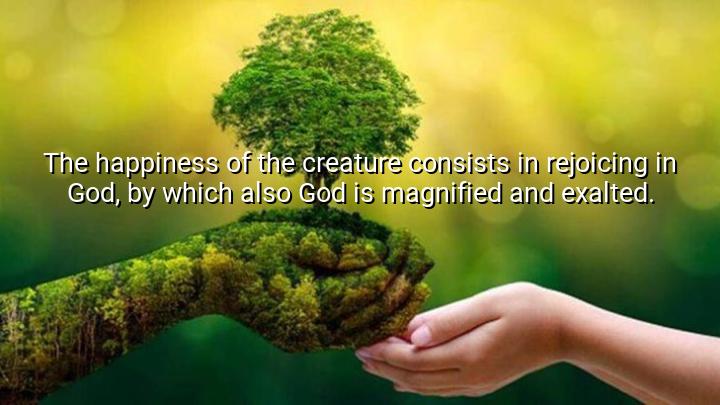




In this quote, Jonathan Edwards expresses the idea that the happiness of a creature—whether human or divine—comes from rejoicing in God. According to Edwards, true happiness is found in worshiping and praising God, as this act of rejoicing not only brings joy to the individual but also serves to magnify and exalt God. This concept is rooted in the belief that happiness and divine worship are intertwined, and that finding joy in God’s presence is both a fulfilling personal experience and a means of glorifying God.
Edwards suggests that the ultimate purpose of happiness is to bring glory to God, which aligns with his theological views. As a prominent figure in the Great Awakening and a key figure in Christian theology, Edwards believed that human fulfillment was best achieved by aligning oneself with God’s will. Happiness, in his view, is not a self-serving emotion but is deeply connected to the act of recognizing and honoring the divine.
The origin of this quote comes from Jonathan Edwards' theological writings, where he often explored the relationship between humanity and God, particularly in terms of worship and the divine purpose. Edwards was a strong proponent of the idea that the highest form of human experience was found through a deep connection to God, which leads to both spiritual fulfillment and the magnification of God's greatness.
Ultimately, Edwards’ words reflect a religious perspective that happiness is not merely an individual pursuit, but an act of devotion and reverence to a higher power. By rejoicing in God, individuals are not only finding their own joy but also fulfilling their spiritual purpose—to magnify and exalt the divine. This view connects happiness with spiritual growth, suggesting that joy is a natural outcome of faith and worship.

AAdministratorAdministrator
Welcome, honored guests. Please leave a comment, we will respond soon