

The greatest happiness of life is the conviction that we are loved; loved for ourselves, or rather, loved in spite of ourselves.
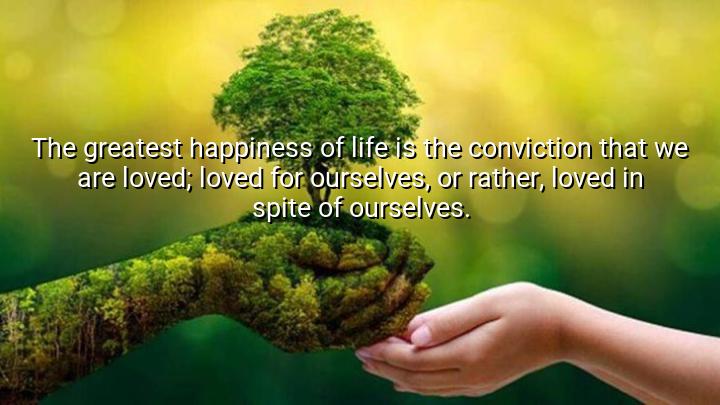




The quote "The greatest happiness of life is the conviction that we are loved; loved for ourselves, or rather, loved in spite of ourselves" by Victor Hugo highlights the profound joy that comes from feeling loved unconditionally. Hugo suggests that the ultimate happiness lies in the conviction or deep belief that we are loved not because of our actions or achievements, but simply for who we are. This type of love offers a sense of security and fulfillment, as it is not based on external validation but on an inherent connection to others.
Hugo’s statement also introduces the concept of being loved in spite of ourselves, which means being accepted even with our flaws, imperfections, and mistakes. Unconditional love is the ability to be cherished regardless of our shortcomings, and it provides a unique form of emotional support and comfort. This love doesn’t demand perfection but embraces us fully, offering a deep sense of worth and belonging.
The idea of being loved for ourselves speaks to the value of self-acceptance and the understanding that true happiness comes from knowing we are cared for as individuals, not for the roles we play or the facades we create. Hugo suggests that being loved without conditions or expectations creates a bond that is both liberating and fulfilling, offering a sense of emotional freedom that is rare in relationships.
Ultimately, the quote reflects the power of love as a source of happiness, emphasizing that the most profound form of joy comes from the acceptance and care we receive from others, as well as the ability to feel that love even in our most vulnerable and imperfect states. Hugo’s words underscore that love is not about perfection, but about the deep emotional connection that transcends faults and embraces us as we are.

AAdministratorAdministrator
Welcome, honored guests. Please leave a comment, we will respond soon