

The greater the step forward in knowledge, the greater is the one taken backward in search of wisdom.
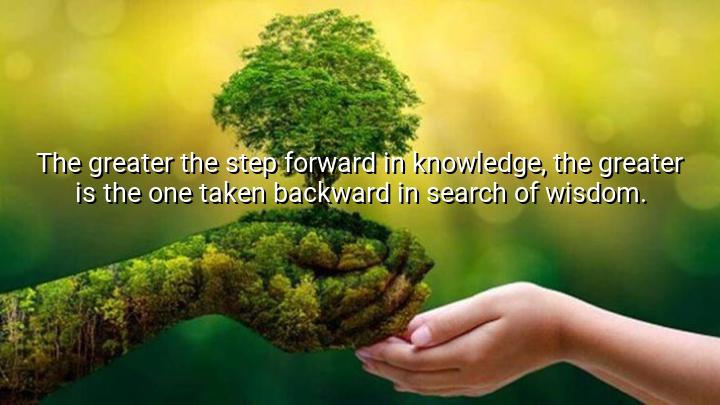




The quote by Stephen Gardiner draws a distinction between knowledge and wisdom, suggesting that while knowledge advances through discovery and progress, wisdom often requires looking back, reflecting, and understanding deeper truths. In other words, progress in information and learning does not automatically equate to true insight. Instead, the more we know, the more we are reminded of the need to pause, reconsider, and seek wisdom through reflection.
The meaning of this quote lies in the contrast between accumulating facts and cultivating understanding. Knowledge is about gaining more data and technical skills, but wisdom involves using that knowledge with discernment, humility, and awareness of its consequences. Gardiner implies that each step forward in human progress requires an equal measure of inward reflection to ensure that what we achieve through science, technology, or learning is guided by ethical and moral clarity.
The origin of the quote can be linked to Stephen Gardiner’s perspective as a British architect and writer, who often reflected on the balance between modern progress and traditional values. Living in the 20th century, a time of rapid technological and cultural change, Gardiner observed how advancements sometimes outpaced human capacity to use them wisely. His words emphasize the importance of grounding progress with wisdom, ensuring that humanity does not lose touch with its deeper purpose.
Ultimately, the quote serves as a reminder that knowledge alone is not enough. Without wisdom, progress can become reckless or destructive. Gardiner’s reflection encourages us to balance our pursuit of innovation with self-examination, ethical responsibility, and respect for timeless truths. It is in this backward search for wisdom that we find the guidance needed to make forward steps truly meaningful.

AAdministratorAdministrator
Welcome, honored guests. Please leave a comment, we will respond soon