

The great work must inevitably be obscure, except to the very few, to those who like the author himself are initiated into the mysteries. Communication then is secondary: it is perpetuation which is important. For this only one good reader is necessary.
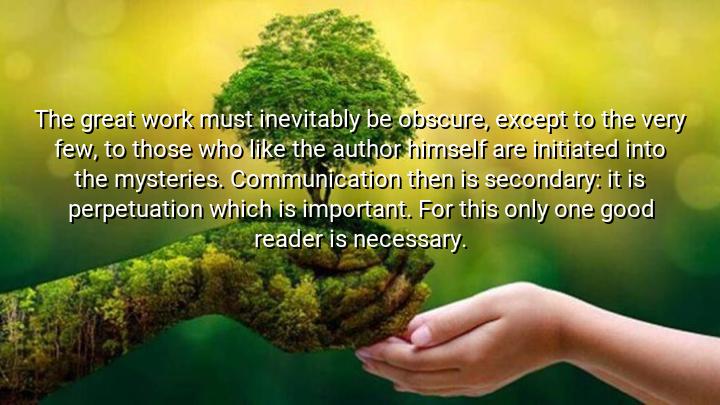




In this quote, Henry Miller reflects on the nature of great work and its relationship to communication. He suggests that truly significant works of art or literature often remain obscure to the masses, understood only by a select few who are initiated into the deeper meaning or "mysteries" of the work, much like the author themselves. This highlights the idea that greatness in creative endeavors does not always lead to immediate or widespread recognition; instead, it may only resonate deeply with a small, discerning audience who can truly appreciate its depth.
Miller goes on to say that communication is secondary in the context of this kind of work. While sharing ideas with others is often considered a primary goal, he argues that perpetuation—or the continued existence and relevance of the work over time—is the true measure of its value. This suggests that the work's longevity and influence, rather than its immediate reception or comprehension, are what truly matter in the long run. The timelessness of a great work is more important than its accessibility or popularity.
The final part of the quote, "For this only one good reader is necessary," underscores the idea that even if only one person fully understands and appreciates the work, it has still fulfilled its purpose. A single reader who deeply engages with the work ensures its perpetuation, allowing it to live on beyond its creation. This reflects Miller’s belief that authenticity and impact matter more than widespread approval or fame.
Ultimately, Miller’s quote speaks to the idea that great art or literature is not always meant to be easily understood by everyone. Its true power lies in its ability to endure, to find at least one audience who is capable of fully appreciating and preserving its meaning for future generations. The quality of that connection is far more significant than the quantity of people it reaches.

AAdministratorAdministrator
Welcome, honored guests. Please leave a comment, we will respond soon