

The great powers of the world may have done wonders in giving the world an industrial look, but the great gift still has to come from Africa - giving the world a more human face.
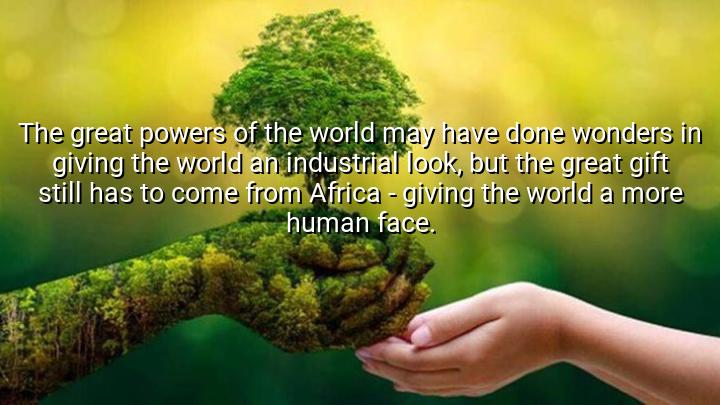




In this quote, Steven Biko contrasts the technological and industrial advancements brought about by the great powers of the world with what he considers to be Africa’s true gift to the world: a more human face. Biko acknowledges the contributions of industrialization and technological development, but he suggests that these achievements, while significant, often overlook the more human aspects of society, such as compassion, empathy, and the recognition of human dignity. For Biko, the industrial revolution and technological progress are not enough on their own to create a truly balanced and just world.
Biko’s mention of Africa as the source of the world’s "more human face" speaks to his belief that African cultures hold important values that are essential for the human spirit. He may be referencing the rich traditions of community, solidarity, and spirituality that are often found in African societies, which emphasize the interconnectedness of humanity and the importance of preserving humanity amidst the drive for material progress. These values, according to Biko, offer the world an opportunity to be more mindful of human relationships and dignity, as opposed to being driven solely by economic and industrial growth.
The phrase "giving the world a more human face" implies that humanity is not just about technological or material achievement but also about creating a world where people are treated with respect, dignity, and compassion. Biko’s focus on Africa as the origin of this "gift" reflects his own advocacy for human rights and the need to return to more human-centered principles, especially in the face of colonialism, exploitation, and industrialization that often strip away the human element in the pursuit of progress.
Ultimately, Biko’s quote reflects his vision of a world where progress and humanity coexist, and where Africa’s influence can guide the world toward a more compassionate, respectful future. By calling attention to Africa’s role in giving the world a more "human face," he highlights the importance of integrating cultural values that foster community, empathy, and understanding in shaping the global future.

AAdministratorAdministrator
Welcome, honored guests. Please leave a comment, we will respond soon