

The great end of life is not knowledge but action.
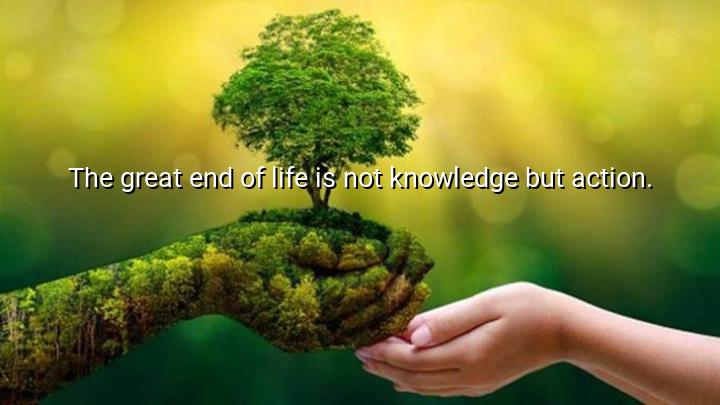




The quote by Francis Bacon, “The great end of life is not knowledge but action,” emphasizes that the purpose of acquiring knowledge is not merely intellectual satisfaction but its practical application in the world. Bacon suggests that learning or understanding alone is insufficient; it must be translated into meaningful action to have true value. This perspective prioritizes the practical impact of human knowledge on improving life and society.
Francis Bacon, a 16th- and 17th-century English philosopher, statesman, and pioneer of the scientific method, often stressed the importance of empiricism and practical learning. In this quote, he conveys his belief that knowledge achieves its highest purpose when it is applied to solve real-world problems, guide decisions, and foster progress. Intellectual pursuits are important, but they must serve practical ends to be truly significant.
The origin of this quote lies in Bacon’s broader philosophical works on human understanding and the purpose of science and learning. He argued that the acquisition of knowledge is valuable only insofar as it empowers humans to take effective action, whether in governance, ethics, or the improvement of society. Bacon’s writings often emphasized the unity of theory and practice, advocating that reflection should lead to tangible outcomes.
Ultimately, Bacon’s insight reminds us that knowledge alone is incomplete without action. The quote underscores the importance of applying what we learn to effect change, make informed decisions, and contribute positively to the world. True mastery lies not just in knowing but in doing, aligning understanding with practical, purposeful efforts in life.

AAdministratorAdministrator
Welcome, honored guests. Please leave a comment, we will respond soon