

The government, whether state or central, is elected. That means we have a responsibility to elect the right kind of leaders.
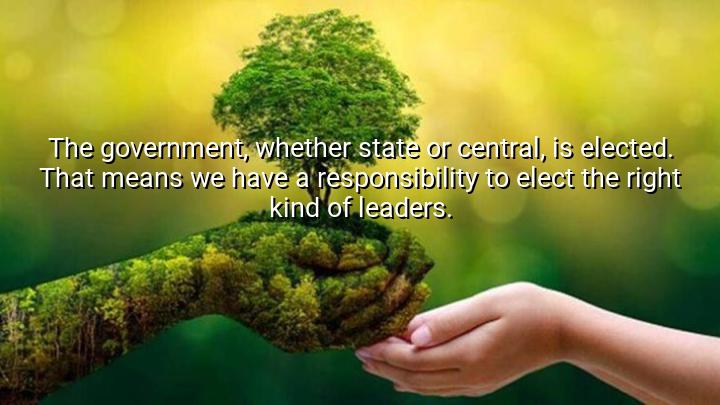




In this quote, A. P. J. Abdul Kalam, the 11th President of India, underscores the responsibility of citizens to choose the right leaders when electing their government, whether at the state or central level. Kalam emphasizes that government leaders are elected by the people, and with this power comes the obligation to elect individuals who will serve the public good. This highlights the idea that democracy is not just about casting votes but about making informed choices that align with the needs and values of society.
Kalam’s statement reflects his belief in the importance of leadership and the role it plays in shaping a nation. He argues that the quality of a government is directly influenced by the people’s ability to select competent, ethical, and visionary leaders. In his view, effective leadership is essential for national development and progress, and this begins with the choices made at the ballot box. By electing the right kind of leaders, citizens contribute to the overall health and success of the democratic system.
The quote also emphasizes the idea that citizenship comes with the responsibility of being an active participant in the democratic process. It encourages individuals to look beyond party affiliations or personal biases and focus on the qualities of candidates who can lead with integrity, vision, and commitment to public service. For Kalam, the future of a nation depends on the choices made by its citizens, as they shape the direction of the government through their votes.
The origin of this quote can be traced to Kalam's deep commitment to democracy, education, and nation-building. As a renowned scientist and a leader who was dedicated to the development of India, Kalam often spoke about the need for good governance and the importance of citizen participation in electing leaders who would drive positive change. His focus on the responsibility of the electorate is part of his broader vision of a nation built on strong values, informed choices, and responsible leadership.

AAdministratorAdministrator
Welcome, honored guests. Please leave a comment, we will respond soon