

The future is always a dystopia in movies.
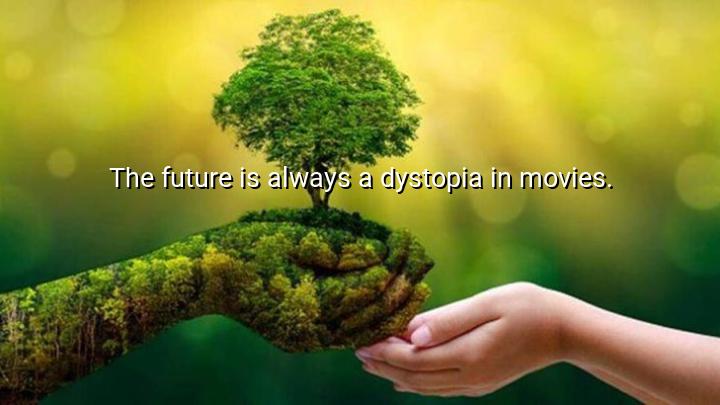




In this quote, Alex Cox comments on the frequent portrayal of the future in movies, where it is often depicted as a dystopia—a society characterized by suffering, oppression, or ruin. Cox suggests that, in cinematic storytelling, the future is generally shown in a negative light, reflecting humanity’s concerns about technological advancement, environmental destruction, and social decay. This portrayal may stem from the anxiety and uncertainty that many people feel about the direction the world is heading, which filmmakers often translate into dystopian narratives.
The use of dystopia in movies serves as a reflection of societal fears and the potential consequences of current trends, such as authoritarianism, ecological collapse, or the rise of oppressive technologies. Cox's quote suggests that filmmakers often use the future as a canvas for projecting worst-case scenarios, where human society faces the dire consequences of its actions. These films often serve as cautionary tales, warning audiences about the potential dangers of unchecked progress or societal negligence.
By saying that the future is "always" a dystopia in movies, Cox implies that there is a recurring pattern in how the future is portrayed in popular culture. This repeated depiction of a bleak future contrasts with the more hopeful or optimistic vision of the future that might have been more common in earlier decades. It reflects a shift in societal attitudes, particularly as we face growing concerns about issues like climate change, inequality, and political instability.
Ultimately, Cox’s quote highlights the pessimistic view of the future that is often prevalent in science fiction and film, suggesting that filmmakers use dystopian themes to explore human nature, societal flaws, and global challenges. It points to the power of film as a tool for reflecting and critiquing the fears and uncertainties of the world, using the future as a lens through which we can examine the present.

AAdministratorAdministrator
Welcome, honored guests. Please leave a comment, we will respond soon