

The future enters into us, in order to transform itself in us, long before it happens.
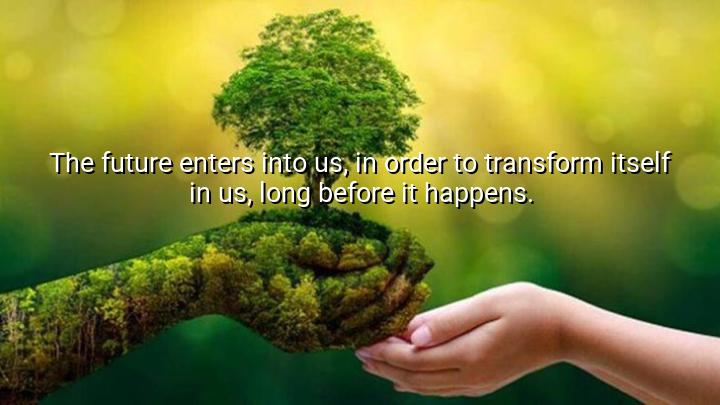




The quote "The future enters into us, in order to transform itself in us, long before it happens" by Rainer Maria Rilke suggests that the future is not something that merely happens to us, but rather, it begins to shape us and our experiences long before it arrives. Rilke implies that the events and choices of the future are already influencing our thoughts, actions, and even our inner transformations in the present. In a sense, the future becomes a part of our psychology and being, gradually molding who we are and how we perceive the world.
Rilke’s words also point to the interconnectedness of time, suggesting that the future does not just unfold in isolation but is intertwined with our present selves. The transformation he refers to is the subtle, often unnoticed process where our expectations, hopes, and anticipations about what is to come begin to shape the way we live now. This transformation is not always immediate or obvious, but it gradually influences our decisions and the paths we take in life.
The origin of the quote can be traced to Rilke’s larger body of work, which often explored themes of existential reflection, time, and the human condition. As a poet deeply interested in the inner workings of the self and the mysteries of life, Rilke was keenly aware of how the past, present, and future are all connected. He often delved into how human beings are affected by forces beyond their control, including time and the inevitable changes that come with it.
Ultimately, Rilke’s quote reminds us that the future is not a distant or abstract concept, but something that already influences us in profound ways. By transforming us before it even arrives, the future shapes our choices, emotions, and even our identity, highlighting the fluid and dynamic relationship between time and the self.

AAdministratorAdministrator
Welcome, honored guests. Please leave a comment, we will respond soon