

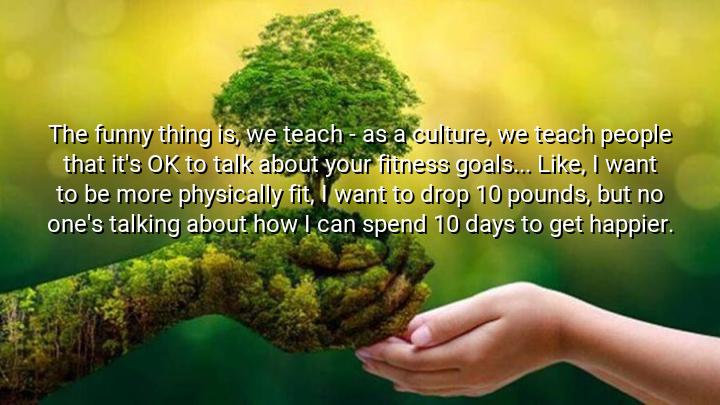
The funny thing is, we teach - as a culture, we teach people that it's OK to talk about your fitness goals... Like, I want to be more physically fit, I want to drop 10 pounds, but no one's talking about how I can spend 10 days to get happier.
The funny thing is, we teach
The funny thing is, we teach - as a culture, we teach people that it's OK to talk about your fitness goals... Like, I want to be more physically fit, I want to drop 10 pounds, but no one's talking about how I can spend 10 days to get happier.

The funny thing is, we teach
The funny thing is, we teach - as a culture, we teach people that it's OK to talk about your fitness goals... Like, I want to be more physically fit, I want to drop 10 pounds, but no one's talking about how I can spend 10 days to get happier.
The funny thing is, we teach
The funny thing is, we teach - as a culture, we teach people that it's OK to talk about your fitness goals... Like, I want to be more physically fit, I want to drop 10 pounds, but no one's talking about how I can spend 10 days to get happier.
The funny thing is, we teach
The funny thing is, we teach - as a culture, we teach people that it's OK to talk about your fitness goals... Like, I want to be more physically fit, I want to drop 10 pounds, but no one's talking about how I can spend 10 days to get happier.
The funny thing is, we teach
The funny thing is, we teach - as a culture, we teach people that it's OK to talk about your fitness goals... Like, I want to be more physically fit, I want to drop 10 pounds, but no one's talking about how I can spend 10 days to get happier.
The funny thing is, we teach

Certainly! Here’s an explanation with bolded keywords related to the quote:

The quote by Karamo Brown critiques cultural attitudes toward fitness goals by pointing out that society often encourages people to openly discuss physical objectives, such as wanting to be more physically fit or to drop 10 pounds. This reflects a common focus on external appearances and measurable health outcomes.

However, Brown highlights a notable gap—there is little conversation about dedicating time and effort to improving one’s happiness or mental well-being, such as spending “10 days to get happier.” This observation challenges the narrow emphasis on physical fitness and calls for a broader understanding of wellness that includes emotional and psychological health.

Originating from Brown’s work as a culture commentator and wellness advocate, the quote encourages a more holistic approach to self-improvement. It urges society to value and openly discuss happiness and mental health alongside physical fitness, promoting a balanced and inclusive view of overall well-being.

Karamo Brown
Karamo Brown

American - Entertainer Born: November 2, 1980

Have 0 Comment The funny thing is, we teach

AAdministratorAdministrator

Welcome, honored guests. Please leave a comment, we will respond soon

Reply.
Information sender
Leave the question
Click here to rate
Information sender
0.37443 sec| 2550.75 kb