

The folly of endless consumerism sends us on a wild goose-chase for happiness through materialism.
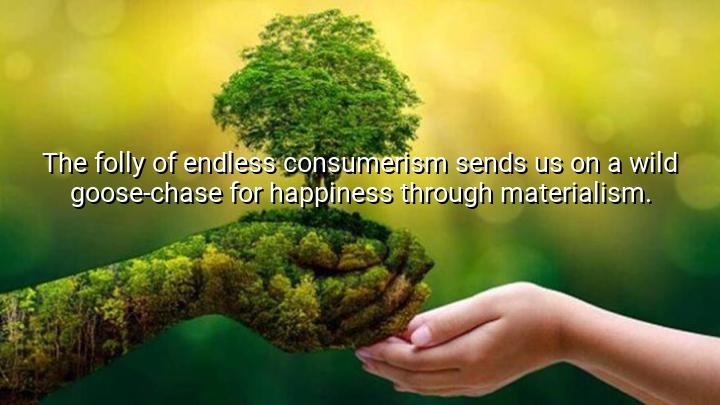




Bryant H. McGill’s quote, "The folly of endless consumerism sends us on a wild goose-chase for happiness through materialism," critiques the societal obsession with acquiring goods and possessions in the pursuit of fulfillment. McGill suggests that the relentless drive for more material wealth, often encouraged by modern consumer culture, leads people on a futile search for happiness. Instead of finding lasting satisfaction, individuals find themselves trapped in an endless cycle of wanting more, which ultimately does not bring true happiness.
The use of the term "wild goose-chase" emphasizes the futility of seeking happiness through material possessions. Just as a wild goose-chase is an impossible and fruitless pursuit, so too is the idea that acquiring more things will lead to genuine fulfillment. McGill’s statement suggests that people often overlook the deeper, more meaningful sources of happiness, such as relationships, personal growth, or inner peace, in favor of the fleeting satisfaction that material goods can provide.
McGill’s critique of materialism reflects a broader cultural concern about the impact of consumerism on mental and emotional well-being. In today’s world, where success and happiness are frequently equated with material wealth and possessions, McGill points out that this focus on external accumulation leads people away from what truly brings joy and contentment. His message is a call to reassess values and seek fulfillment in more sustainable, internal sources.
The origin of the quote likely stems from McGill’s advocacy for self-awareness and the importance of mindfulness in daily life. As a writer and motivational speaker, McGill often discusses the dangers of societal pressures and the importance of focusing on inner fulfillment rather than outward symbols of success. This quote encapsulates his belief that happiness is not found in material wealth but in living authentically and meaningfully.

AAdministratorAdministrator
Welcome, honored guests. Please leave a comment, we will respond soon