

The figure a poem makes. It begins in delight and ends in wisdom... in a clarification of life - not necessarily a great clarification, such as sects and cults are founded on, but in a momentary stay against confusion.
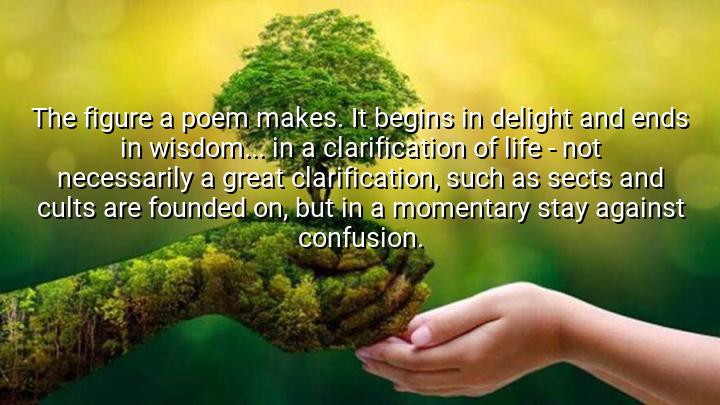




Robert Frost’s quote explores the structure and impact of a poem. He suggests that a poem often begins with a sense of delight, drawing the reader in through beauty, emotion, or rhythm, and then evolves into wisdom. This wisdom, however, is not meant to be a grand or definitive truth like those found in religious sects or cults. Instead, it offers a more personal, momentary clarity—a brief respite or a stay against confusion, providing temporary insight into life’s complexities.
The origin of the quote comes from Robert Frost, one of America’s most celebrated poets, known for his simple yet profound poems that often explore themes of nature, life, and humanity. Frost’s poetry often reflects his belief in the power of language to illuminate and clarify, but he also recognized that the insights poetry provides are more nuanced and fleeting compared to absolute truths. His description of the figure a poem makes emphasizes the process of understanding that poetry offers: an emotional and intellectual journey rather than a concrete solution to life’s mysteries.
Frost’s statement implies that poetry doesn’t provide ultimate answers but rather helps the reader achieve a brief clarification of life, offering a momentary pause from the chaos and confusion of everyday existence. This momentary clarity doesn’t promise grand revelations or life-changing epiphanies; rather, it serves to bring a sense of order or perspective—however fleeting. The quote also reflects Frost’s view that art, particularly poetry, doesn’t need to provide absolute or rigid answers to be valuable. Instead, it can offer a temporary sense of understanding that makes life feel more comprehensible.
In a broader sense, the quote highlights the role of art in providing comfort and insight. Frost’s portrayal of poetry as a "stay against confusion" suggests that art has the ability to bring peace or clarity to our turbulent minds, even if only momentarily. It underscores the idea that sometimes the value of art lies not in providing definitive answers, but in helping us navigate the complexities of life with a clearer mind and heart.

AAdministratorAdministrator
Welcome, honored guests. Please leave a comment, we will respond soon