

The end of all knowledge should be service to others.
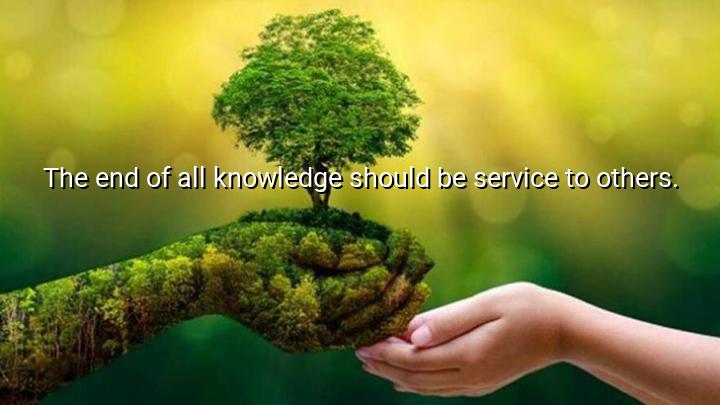




The quote by Cesar Chavez, "The end of all knowledge should be service to others," emphasizes the ethical purpose of learning and education. Chavez, a prominent American labor leader and civil rights activist, believed that the ultimate goal of acquiring knowledge is not personal gain or prestige, but the ability to contribute positively to society. He advocated for using skills, education, and understanding to improve the lives of others, particularly marginalized and underserved communities.
By connecting knowledge with service, Chavez highlights that true learning is intertwined with responsibility and compassion. It is not enough to simply accumulate information or expertise; one must apply it in ways that support, uplift, and empower others. This perspective encourages a moral and socially conscious approach to education and personal development.
The quote also reflects Chavez’s broader philosophy of activism and leadership, which focused on solidarity, community-building, and social justice. He consistently emphasized that leadership and action should be guided by a commitment to improving the welfare of workers and the disadvantaged, demonstrating that knowledge gains meaning when it is aligned with ethical service.
Originating from Chavez’s speeches and writings on education, leadership, and social responsibility, the quote captures his enduring belief that learning and skill development should ultimately benefit society. It serves as a reminder that the highest purpose of knowledge is to act in service to others, transforming insight and expertise into meaningful social impact.

AAdministratorAdministrator
Welcome, honored guests. Please leave a comment, we will respond soon