

The calling of the humanities is to make us truly human in the best sense of the word.
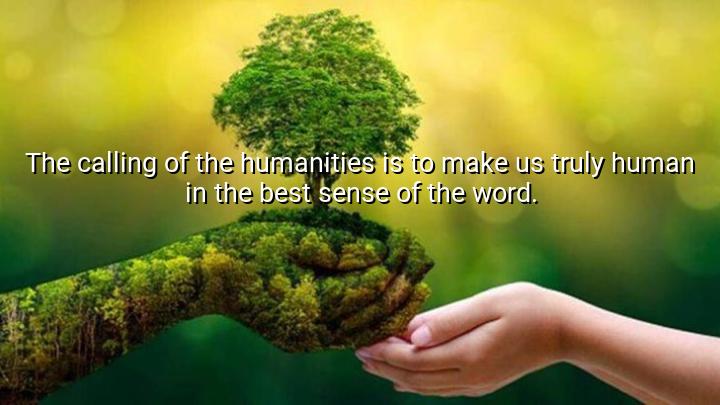




The quote “The calling of the humanities is to make us truly human in the best sense of the word.” by J. Irwin Miller frames the humanities as a moral and cultural vocation, not just an academic field. By using the word calling, Miller suggests a purpose-driven mission: studying literature, history, philosophy, and the arts to cultivate the qualities that make us fully human—reflection, empathy, ethical judgment, and a sense of meaning.
In saying “truly human,” Miller points to the difference between mere technical proficiency and human flourishing. The humanities foster capacities like imagination, critical thinking, and moral insight, which help us see other people as ends in themselves, not as instruments. This is the best sense of being human: curious yet humble, capable of self-critique, and oriented toward the common good.
The origin of the sentiment aligns with Miller’s life as a mid‑20th‑century American industrialist and philanthropist known for championing education, the arts, and civic life. From his vantage point in business and public service, he saw that societies thrive not only on science and technology but also on the humanities, which shape character, deepen civic responsibility, and preserve cultural memory.
Ultimately, Miller’s quote is a reminder that a healthy culture needs more than productivity; it needs wisdom. The humanities help us ask better questions about justice, beauty, and purpose, guiding individuals and communities toward a richer, more ethical understanding of what it means to be human.

AAdministratorAdministrator
Welcome, honored guests. Please leave a comment, we will respond soon