

The best place to find God is in a garden. You can dig for him there.
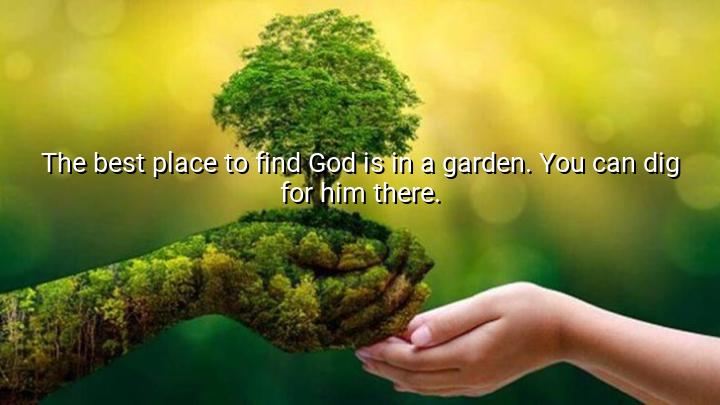




The quote “The best place to find God is in a garden. You can dig for him there.” by George Bernard Shaw reflects a profound connection between nature and spirituality. Shaw suggests that gardens embody a divine presence, offering a sense of peace and renewal. The act of digging and working the soil is portrayed as a way of encountering the sacred, implying that divinity is not distant but found in the natural world around us.
The origin of the quote lies in Shaw’s broader philosophy. As a playwright and critic, Shaw often explored themes of religion, nature, and human purpose. He believed that gardens symbolize life’s cycles of growth and decay, and by tending to them, people become more attuned to the rhythms of existence. This makes the garden a metaphorical and literal space for connecting with God.
The phrase “dig for him” also suggests effort and intention. Shaw highlights that spiritual discovery does not come passively; it requires hands-on engagement with the world. Working the land becomes both a meditative act and a reminder of humanity’s dependence on nature for survival and sustenance.
Ultimately, the quote underscores the idea that divinity can be found in ordinary experiences. Rather than seeking God only in places of worship, Shaw directs us to look at the earth itself. The garden thus becomes a living sanctuary, reminding us that spirituality can flourish wherever life takes root.

AAdministratorAdministrator
Welcome, honored guests. Please leave a comment, we will respond soon