

The beauty of the world, which is so soon to perish, has two edges, one of laughter, one of anguish, cutting the heart asunder.
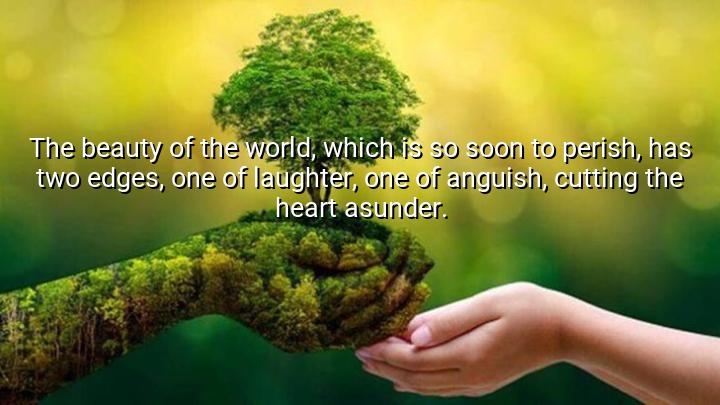




The quote "The beauty of the world, which is so soon to perish, has two edges, one of laughter, one of anguish, cutting the heart asunder" by Virginia Woolf reflects the complex, transient nature of life and the human experience. Woolf, a pioneering modernist writer, often explored the tension between joy and sorrow in her works. In this quote, she points out that the beauty of the world is fleeting, and its moments of laughter and anguish are intertwined. The contrast between these two emotions shapes our emotional journey and can evoke deep, conflicting feelings.
Woolf suggests that life’s beauty is not one-dimensional. It is marked by both moments of happiness and suffering, which together define the fullness of human experience. The image of beauty having "two edges" symbolizes the duality of existence—one side offering laughter and delight, while the other brings anguish and pain. These contrasting emotions are essential parts of life, and their coexistence can make the experience of beauty even more poignant and intense.
The phrase "cutting the heart asunder" evokes the idea that this duality can be emotionally overwhelming. The heart here represents our inner emotional world, and the experience of both laughter and anguish can tear us apart, making us feel both elated and heartbroken simultaneously. This emotional complexity is a core theme in Woolf's writing, where characters often struggle to reconcile conflicting emotions and the fleeting nature of happiness.
Ultimately, Woolf’s quote captures the ephemeral nature of beauty and how its fleetingness, combined with the contrast between joy and sorrow, shapes our emotional experience of the world. The recognition that beauty is both uplifting and painful encourages us to embrace life’s full spectrum, understanding that the moments of anguish make the laughter all the more meaningful.

AAdministratorAdministrator
Welcome, honored guests. Please leave a comment, we will respond soon