

That's the whole spiritual life. It's learning how to die. And as you learn how to die, you start losing all your illusions, and you start being capable now of true intimacy and love.
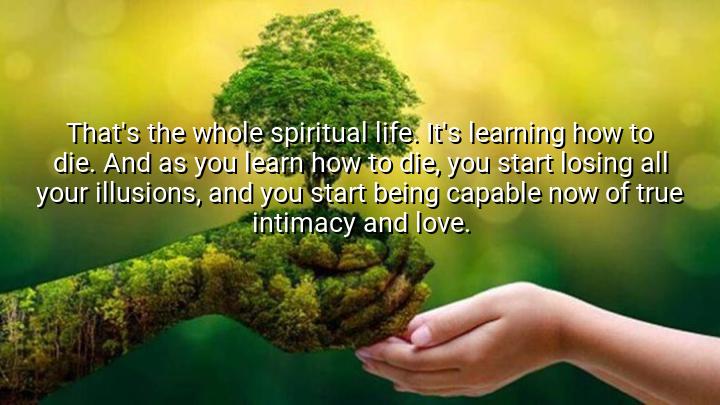




In this quote, Eugene H. Peterson presents a profound perspective on spirituality and the human experience. He suggests that the core of the spiritual life is essentially about learning how to die, not in a literal sense, but in the metaphorical sense of letting go of ego, pride, and attachments. This process of dying is about shedding the false versions of ourselves that we cling to and confronting our vulnerabilities and mortality. In doing so, we create space for deeper, more meaningful connections with ourselves and others.
As Peterson continues, he explains that in this journey of self-transformation, we begin to lose our illusions—those false beliefs and pretensions that we hold about ourselves, others, and the world. These illusions are often what prevent us from experiencing true intimacy and authentic love. By learning to accept our imperfections and limitations, we are able to see others more clearly and with greater empathy, which allows us to form deeper, more genuine relationships.
Peterson's idea is rooted in the belief that true intimacy and love are not possible unless we are willing to strip away the defenses and masks that we often wear. When we are no longer afraid of vulnerability or the idea of letting go, we become capable of forming connections that are unshackled from fear, insecurity, or selfishness. This process requires a kind of spiritual maturity, where we are no longer afraid to face the reality of our mortality and the fleeting nature of life.
Ultimately, Peterson's quote is a call to embrace the impermanence of life and the need to live authentically. It highlights that only through confronting the inevitable reality of death—in a symbolic, spiritual sense—can we truly learn to live and love with openness and sincerity. Through this journey, we unlock the ability to experience life in its truest form, free from illusions and full of compassion and connection.

AAdministratorAdministrator
Welcome, honored guests. Please leave a comment, we will respond soon