

That's not all our crops can do. We are also learning how to transform plants into factories. We can now raise plants that will create enzymes that would otherwise be created in chemical factories.
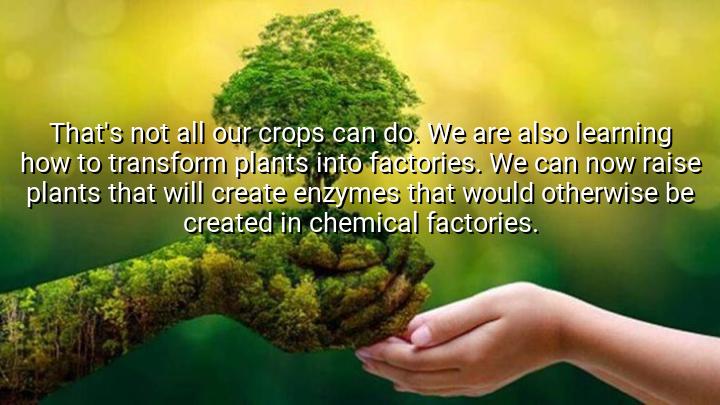




In this quote, Tom Carper highlights the incredible potential of agriculture and biotechnology in transforming how we produce vital substances. He suggests that crops can do more than just provide food; through scientific advancements, plants can now be engineered to function as factories for producing essential products. Carper emphasizes that these plants can be designed to create enzymes, which are typically produced in chemical factories, in a much more sustainable and natural way.
The idea of using plants as biological factories represents a significant shift in how we think about agriculture and production. Instead of relying on traditional industrial methods to manufacture chemicals, enzymes, and other substances, plants can be genetically engineered to produce these materials on their own. This process involves biotechnology techniques that enable plants to perform tasks that were once reserved for complex and resource-heavy chemical production methods.
By raising plants that produce enzymes, Carper points to a more sustainable and eco-friendly approach to manufacturing. This innovation could help reduce the environmental impact of chemical factories, as plants would use natural processes to create substances that were once made through energy-intensive and polluting methods. The development of plant-based factories suggests a future where agriculture and biotechnology work hand in hand to solve various industrial and environmental challenges.
Ultimately, Tom Carper's quote underscores the potential for biotechnology to revolutionize both the agricultural and industrial sectors. By transforming plants into factories that can produce important products like enzymes, we can reduce our reliance on harmful chemical processes, create more sustainable solutions, and tap into the vast potential of nature to meet human needs.

AAdministratorAdministrator
Welcome, honored guests. Please leave a comment, we will respond soon