

Tell me what you eat, and I will tell you who you are.
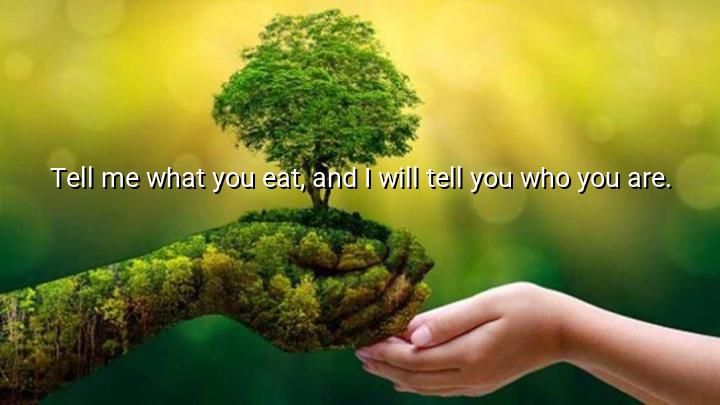




The quote "Tell me what you eat, and I will tell you who you are." by Jean Anthelme Brillat-Savarin suggests that a person’s food choices reveal much about their identity, culture, and values. Brillat-Savarin implies that what we consume goes beyond mere nourishment; it reflects our tastes, background, and even personality. This idea highlights the deep connection between food and self-expression, showing that eating habits can serve as a window into who we are as individuals and as members of society.
The origin of this quote comes from Jean Anthelme Brillat-Savarin, an 18th-century French lawyer and politician who is best known for his work The Physiology of Taste, a seminal text on gastronomy. His writings explore the relationship between food, pleasure, and human nature, making this quote one of his most famous reflections on the cultural significance of eating. Brillat-Savarin’s insight underscores how food can be a marker of social status, tradition, and personal preference.
This quote also speaks to the broader role of food in shaping social identity and cultural heritage. Different cuisines, ingredients, and eating customs can signal one’s origins, lifestyle, and values. By understanding what someone eats, we can gain insight into their background and worldview, making food a powerful tool for connection and understanding.
In essence, Brillat-Savarin’s quote reminds us that food is more than just sustenance—it is an expression of identity. It encourages us to consider how our dietary choices reflect who we are and how they connect us to larger cultural narratives and communities.

AAdministratorAdministrator
Welcome, honored guests. Please leave a comment, we will respond soon