

Teach love, generosity, good manners and some of that will drift from the classroom to the home and who knows, the children will be educating the parents.
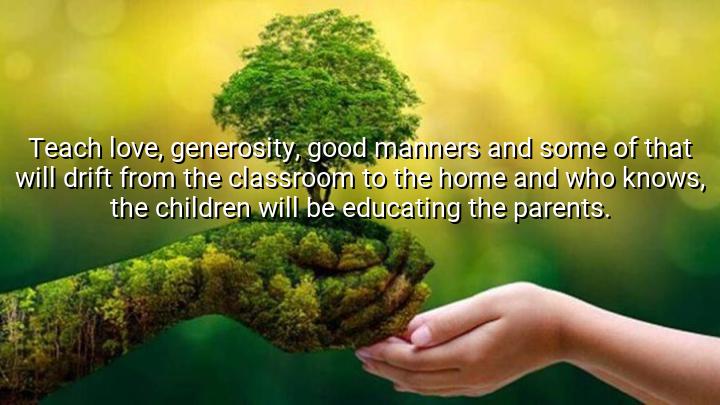




In this quote, Roger Moore emphasizes the importance of teaching love, generosity, and good manners in the classroom. He suggests that these values, when taught in schools, can have a ripple effect that extends beyond the educational environment. Moore believes that the impact of such teachings can drift from the classroom to the home, where children may internalize these principles and apply them in their interactions with their families.
Moore’s statement also reflects the power of education in shaping character and societal values. By imparting these fundamental qualities to children, educators play a crucial role in creating a more compassionate and considerate society. The notion that children might then influence their parents indicates the reciprocal nature of learning—how children, through their behavior and understanding, can help educate and transform the adults around them, fostering a cycle of positive change.
The phrase "who knows, the children will be educating the parents" adds an element of hope and optimism to Moore's perspective. It suggests that children, who are often seen as the recipients of education, can also become agents of change in their homes. This idea reflects the belief that education is not a one-way process but a dynamic exchange where both children and adults continue to learn and grow from each other.
Ultimately, Moore's quote underscores the importance of character education in schools, encouraging a broader vision of learning that goes beyond academics. By fostering values such as love, generosity, and good manners, educators can have a profound impact on both the children and their families, creating a more harmonious and thoughtful society.

AAdministratorAdministrator
Welcome, honored guests. Please leave a comment, we will respond soon