

Such lifestyle factors such as cigarette smoking, excessive alcohol consumption, little physical activity and low dietary calcium intake are risk factors for osteoporosis as well as for many other non-communicable diseases.
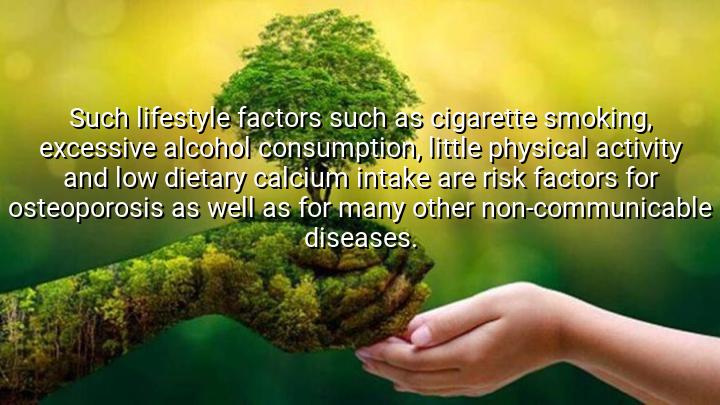




The quote, "Such lifestyle factors such as cigarette smoking, excessive alcohol consumption, little physical activity and low dietary calcium intake are risk factors for osteoporosis as well as for many other non-communicable diseases," comes from Gro Harlem Brundtland, a former Prime Minister of Norway and the former Director-General of the World Health Organization (WHO). Brundtland, known for her focus on public health and sustainable development, is emphasizing how certain lifestyle factors contribute to the development of osteoporosis and other non-communicable diseases (NCDs).
The meaning of the quote highlights the importance of adopting a healthy lifestyle to reduce the risk of chronic conditions such as osteoporosis, heart disease, diabetes, and various forms of cancer. Brundtland points out that behaviors like smoking, excessive alcohol consumption, lack of physical activity, and low dietary calcium intake significantly increase the likelihood of developing osteoporosis, a condition that weakens bones, making them more prone to fractures. These same lifestyle factors are also linked to a range of other non-communicable diseases that are major global health concerns.
By addressing these risk factors, Brundtland advocates for a preventive approach to healthcare. She emphasizes that by making simple changes to one’s lifestyle, such as avoiding tobacco, drinking in moderation, being physically active, and ensuring adequate calcium intake, individuals can greatly reduce their risk of suffering from osteoporosis and other chronic diseases. This focus on prevention is critical for improving global health and reducing the burden on healthcare systems.
Ultimately, Brundtland’s quote is a call for global awareness about the impact of lifestyle choices on long-term health. She stresses the need for education and policy changes to encourage healthier behaviors, which in turn can help reduce the prevalence of both osteoporosis and other non-communicable diseases. Her work in public health continues to influence efforts to prevent chronic diseases through healthy lifestyle choices.

AAdministratorAdministrator
Welcome, honored guests. Please leave a comment, we will respond soon