

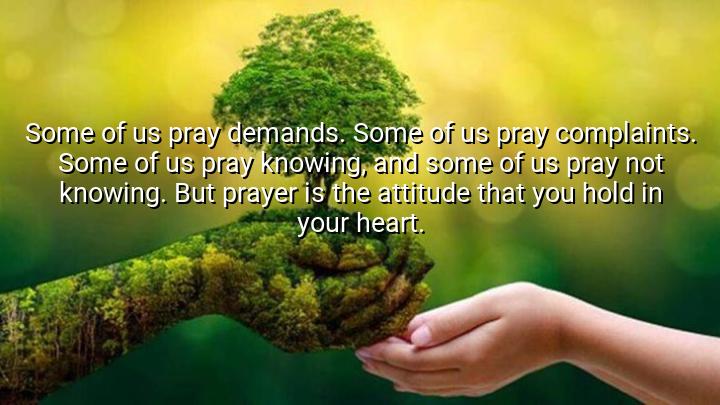
Some of us pray demands. Some of us pray complaints. Some of us pray knowing, and some of us pray not knowing. But prayer is the attitude that you hold in your heart.




Certainly! Here’s an explanation of the quote with bolded keywords:
This quote by Iyanla Vanzant explores the diverse ways people approach prayer, highlighting different attitudes such as praying with demands, with complaints, with knowing, or with not knowing. She acknowledges that prayer is a deeply personal experience, varying greatly depending on one’s mindset and emotional state at the time.
Vanzant emphasizes that regardless of the specific form or content of prayer, what truly matters is the underlying attitude held within the heart. This suggests that prayer is not just about words or requests, but about the sincerity, openness, and emotional stance one brings to the act of connecting with a higher power or inner self.
The origin of this quote comes from Vanzant’s work as a spiritual teacher and author, known for her focus on healing, empowerment, and personal growth. Her insight encourages a broader and more compassionate understanding of prayer as an expression of the heart’s attitude rather than rigid formulas.
Overall, the quote invites us to recognize prayer as a reflection of our inner attitude, reminding us that the essence of prayer lies in the genuine feelings and intentions we carry within, no matter how we express them.

AAdministratorAdministrator
Welcome, honored guests. Please leave a comment, we will respond soon