

So that's the dissenter's hope: that they are writing not for today but for tomorrow.
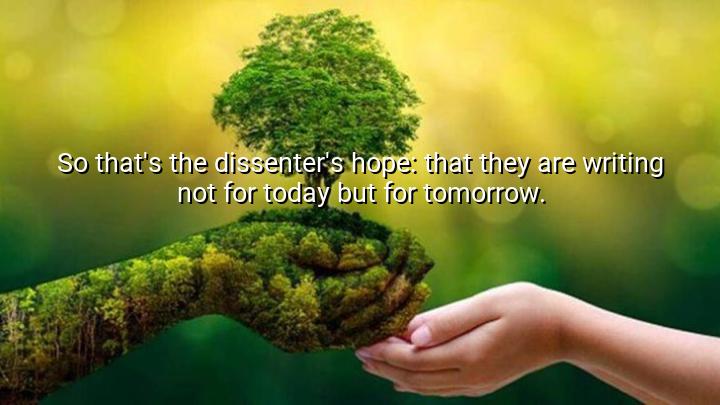




In this quote, Ruth Bader Ginsburg highlights the role of a dissenter, someone who disagrees with the prevailing view, often in a legal or political context. The dissenter's hope is not to gain immediate recognition or support but to plant the seeds of change that will be understood and appreciated in the future. It reflects the idea that sometimes challenging the status quo is not about being right at the moment but about shaping the future.
Ginsburg, known for her impactful role on the U.S. Supreme Court, often dissented on issues she felt were unjust. Her quote sheds light on her belief in the importance of standing up for what’s right, even when the world may not be ready to accept it. By saying "writing not for today but for tomorrow," she suggests that true progress often requires a vision beyond immediate circumstances, trusting that future generations will understand and embrace the dissent.
The quote is a reminder that those who push for change might not always see the results in their lifetime, but their words and actions can lay the groundwork for a better future. It speaks to the power of foresight and legacy, and how a dissenting opinion can be a form of advocacy for long-term progress, especially when the ideas are ahead of their time.
Ultimately, Ginsburg’s statement serves as a testament to the courage of those who speak out in defiance of the current norm, knowing their efforts might be recognized as pivotal only in the future.

AAdministratorAdministrator
Welcome, honored guests. Please leave a comment, we will respond soon