

Sins, like chickens, come home to roost.
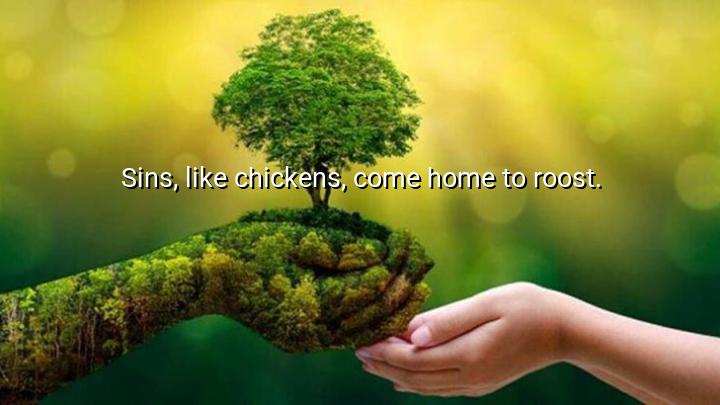




In this quote, Charles W. Chesnutt, an African American writer and social critic, uses the metaphor "sins, like chickens, come home to roost" to suggest that wrongdoing or immoral actions will eventually have consequences. Just as chickens inevitably return to their coop after a day, sins—whether personal or societal—will eventually come back to affect those who committed them. The quote implies that no matter how much one may try to avoid or hide their actions, the truth will eventually be revealed, and the consequences will catch up with them.
The use of chickens as a metaphor emphasizes the idea of inevitability and natural consequence. In many cultures, the image of chickens returning home is a common one, symbolizing the passage of time and the eventual return of what was once put away. In Chesnutt's context, this reflects the broader theme of accountability, particularly in the face of injustices. Whether the "sins" are personal misdeeds or larger societal issues, they will eventually have to be confronted, often when it’s least convenient or expected.
Chesnutt, known for his works exploring issues of race, identity, and justice, often used his writing to comment on the injustices of his time. The quote can be seen as a reflection of his concerns about the consequences of social and racial injustices. In his writing, he frequently examined how historical wrongs—such as those perpetuated by slavery or racial discrimination—would eventually have to be addressed and reconciled.
The origin of this quote reflects Chesnutt's lifelong engagement with issues of racial and social inequality in America, particularly in his works like The Conjure Woman and The Marrow of Tradition. His exploration of the consequences of sin—both personal and institutional—was central to his efforts to shed light on the lingering effects of slavery and racism. Through this quote, Chesnutt stresses the idea that all actions, good or bad, eventually come full circle, underscoring the theme of justice and retribution in his broader body of work.

AAdministratorAdministrator
Welcome, honored guests. Please leave a comment, we will respond soon