

Since President Kennedy signed the Equal Pay Act in 1963, the gap between men and women's earnings has narrowed by less than a half-cent per year. At this rate, American women will have to wait until 2062 to bring home the same salary as their male counterparts.
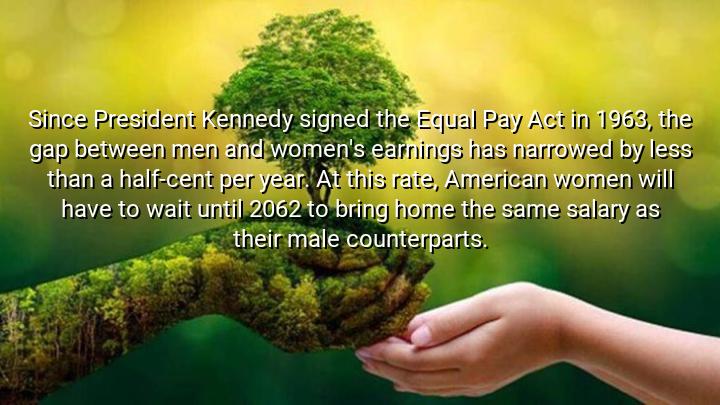




In the quote by Jackie Speier, "Since President Kennedy signed the Equal Pay Act in 1963, the gap between men and women's earnings has narrowed by less than a half-cent per year. At this rate, American women will have to wait until 2062 to bring home the same salary as their male counterparts," she highlights the slow progress in closing the gender pay gap in the United States, despite the passing of the Equal Pay Act over 50 years ago. Speier draws attention to the fact that the legislation, which was designed to ensure equal pay for equal work, has had minimal effect on achieving gender pay equality, as the gap between men’s and women’s earnings has narrowed at an incredibly slow pace.
Speier’s mention of a half-cent per year underscores the frustratingly small amount of progress made each year in closing the pay gap. This figure emphasizes that, despite legal efforts to address pay inequality, the change has been insignificant and much slower than anticipated. By projecting that women will not achieve pay parity until 2062, Speier conveys the urgency of the issue, stressing that the current pace is unacceptable and unsustainable.
The quote also highlights the continued disparity in earnings between men and women, reflecting a systemic issue that goes beyond legislation. The Equal Pay Act was meant to address overt discrimination, but Speier points out that other factors, such as societal norms, lack of negotiation power, and biases in hiring and promotion practices, continue to contribute to the persistence of the gender wage gap. This points to the need for more comprehensive approaches to achieving gender equity in the workplace.
Ultimately, Speier’s quote serves as a call to action for continued advocacy and reform to address gender inequality in the workforce. It underscores that, despite significant legal milestones, the fight for equal pay is far from over. Speier uses this >women are compensated fairly for their work, emphasizing the need for policy change and societal shifts to close the wage gap more effectively.

AAdministratorAdministrator
Welcome, honored guests. Please leave a comment, we will respond soon