

Search not to find things too deeply hid; Nor try to know things whose knowledge is forbid.
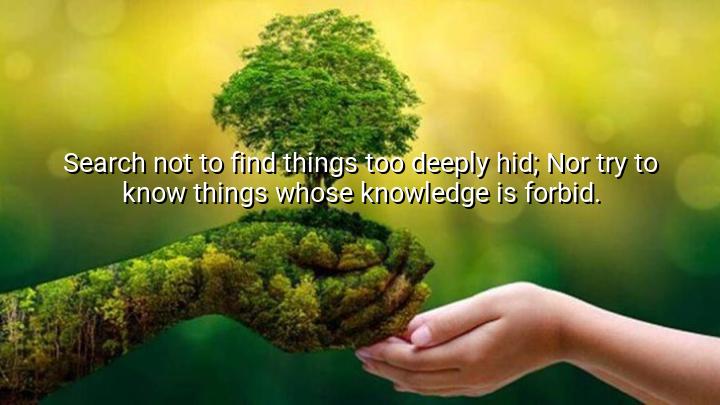




This quote by John Denham explores the limits of human curiosity and the boundaries of knowledge. By stating, “Search not to find things too deeply hid,” Denham advises against pursuing knowledge that is concealed or difficult to uncover, suggesting that some mysteries of life are meant to remain beyond human grasp. The quote emphasizes the importance of recognizing the natural limits of understanding.
Denham further cautions against seeking forbidden knowledge. “Nor try to know things whose knowledge is forbid” implies that certain truths may be restricted by moral, spiritual, or societal boundaries, and attempting to uncover them can be dangerous or inappropriate. This reflects a broader theme of ethical responsibility in the pursuit of knowledge, reminding individuals to balance curiosity with prudence.
The quote originates from John Denham, a 17th-century English poet and politician, known for his reflective and moralistic poetry. Denham’s work often dealt with themes of human behavior, morality, and the natural order, blending literary elegance with philosophical insight. His advice encourages careful discernment in intellectual pursuits.
Ultimately, the quote touches on themes of restraint, ethical responsibility, and the boundaries of human understanding. It suggests that while the pursuit of knowledge is valuable, one must also respect limits imposed by nature, society, or morality, recognizing that some things are hidden for good reason and should not be sought recklessly.

AAdministratorAdministrator
Welcome, honored guests. Please leave a comment, we will respond soon