

People of the future may suffer not from an absence of choice but from a paralysing surfeit of it. They may turn out to be victims of that peculiarly super-industrial dilemma: overchoice.
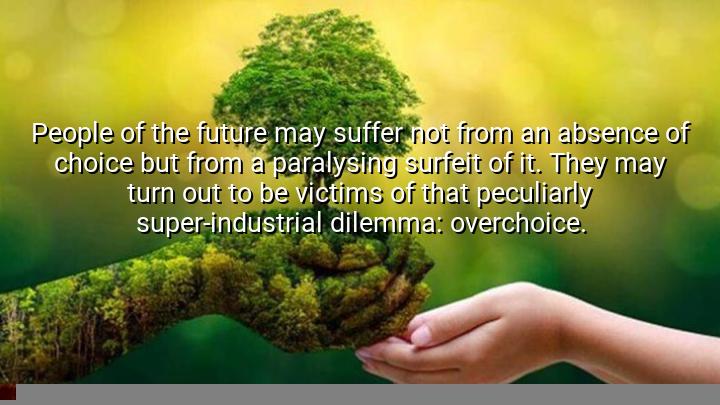




In this quote, Alvin Toffler, a futurist and author of Future Shock, warns about the potential dangers of overchoice in the future. He suggests that rather than suffering from a lack of options, people might face a more subtle challenge—being overwhelmed by an excess of choices. This phenomenon, which he refers to as the "peculiarly super-industrial dilemma," could lead to paralysis and indecision, as individuals struggle to navigate the sheer volume of decisions available to them.
Toffler's concept of overchoice reflects the modern condition where technology and consumer culture provide an ever-expanding array of options in virtually every aspect of life, from consumer goods to career paths to personal relationships. While having choices is generally seen as a sign of freedom and progress, Toffler argues that too many options can create a cognitive overload, making it difficult for individuals to make decisions or feel satisfied with their choices.
This idea of overchoice aligns with Toffler’s broader theory of future shock, where rapid societal and technological changes can create a sense of disorientation and anxiety. As the future unfolds, people may find themselves constantly confronted with new options, leading to a feeling of being trapped by the very abundance that is supposed to enhance their lives. Toffler is cautioning that freedom through choice, if not carefully managed, could lead to its own set of problems.
Ultimately, Toffler’s quote highlights the potential paradox of modern progress: while advancements offer more freedom and opportunity, they can also overwhelm individuals, making decision-making more difficult and less satisfying. His warning about overchoice serves as a reminder to consider how the quantity of options can sometimes interfere with quality of life, urging us to think critically about how we handle abundance in our increasingly complex world.

AAdministratorAdministrator
Welcome, honored guests. Please leave a comment, we will respond soon