

Partition is bad. But whatever is past is past. We have only to look to the future.
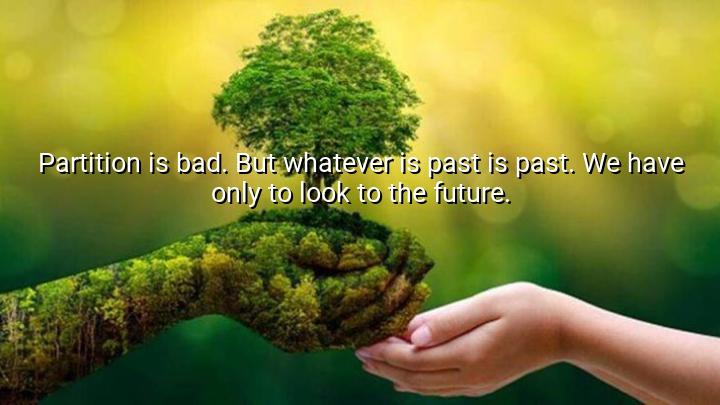




The quote "Partition is bad. But whatever is past is past. We have only to look to the future." by Mahatma Gandhi reflects his perspective on the partition of India in 1947, which resulted in the division of the country into India and Pakistan. Gandhi acknowledges the negative impact of partition, which caused widespread violence, displacement, and loss of life. However, he advocates for focusing on the future rather than dwelling on the painful events of the past.
Gandhi’s statement emphasizes the importance of forgiveness and moving forward. By saying, "whatever is past is past," he encourages people to let go of the historical divisions and suffering caused by the partition, and to instead channel their energy into building a better future. This reflects Gandhi’s philosophy of non-violence and his belief in reconciliation and unity.
The quote also points to Gandhi’s broader vision of a unified India where people of different backgrounds, religions, and cultures could live together peacefully, despite the divisions of the past. His call to "look to the future" reflects his belief that the future should be shaped by hope, peace, and understanding, rather than being hindered by past conflicts or injustices.
Ultimately, Gandhi’s quote serves as a reminder of the power of forgiveness and forward-thinking in the face of historical wounds. By focusing on the future and leaving the past behind, Gandhi believed that individuals and nations could heal and work towards a more harmonious and inclusive society.

AAdministratorAdministrator
Welcome, honored guests. Please leave a comment, we will respond soon