

Part of the happiness of life consists not in fighting battles, but in avoiding them. A masterly retreat is in itself a victory.
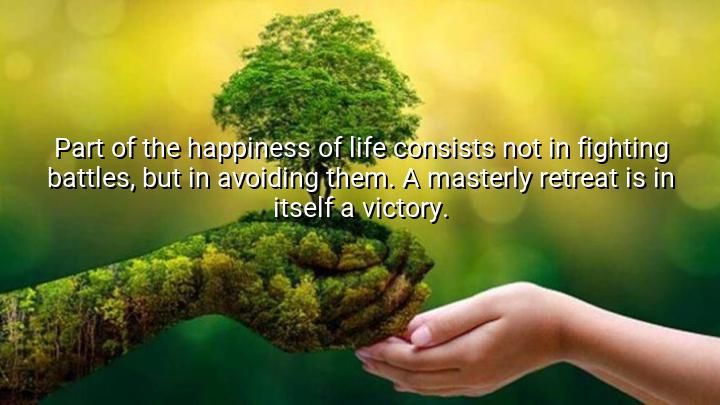




In this quote, Norman Vincent Peale suggests that true happiness in life is not always found in conflict or striving for victory through battle, but in the ability to avoid unnecessary struggles. He implies that peace and contentment come not from engaging in every fight or challenge, but from recognizing when it’s wiser to step back or retreat. The idea of a masterly retreat as a form of victory emphasizes the power of strategic avoidance and the wisdom in choosing peace over conflict.
Peale's quote challenges the common notion that success and happiness are synonymous with fighting and overcoming obstacles. Instead, he highlights the importance of discernment and knowing when to hold back, which can lead to greater emotional and mental well-being. In some cases, avoiding a battle—whether literal or metaphorical—can be more empowering and lead to a more fulfilling life than engaging in constant confrontation.
The origin of the quote can be traced to Peale's focus on positive thinking and personal empowerment. As a renowned minister and author, Peale promoted the idea that attitude and mindset are crucial to achieving happiness and success. His teachings often revolved around the belief that choosing a positive and peaceful approach to life can lead to better outcomes than focusing on conflict or struggle.
Ultimately, Peale’s quote encourages individuals to find victory in avoiding unnecessary battles, suggesting that peace and self-control can be more powerful than engaging in endless conflict. It emphasizes the importance of wisdom, self-awareness, and knowing when to step back, offering a path to greater harmony and happiness in life.

AAdministratorAdministrator
Welcome, honored guests. Please leave a comment, we will respond soon