

Our prime purpose in this life is to help others. And if you can't help them, at least don't hurt them.
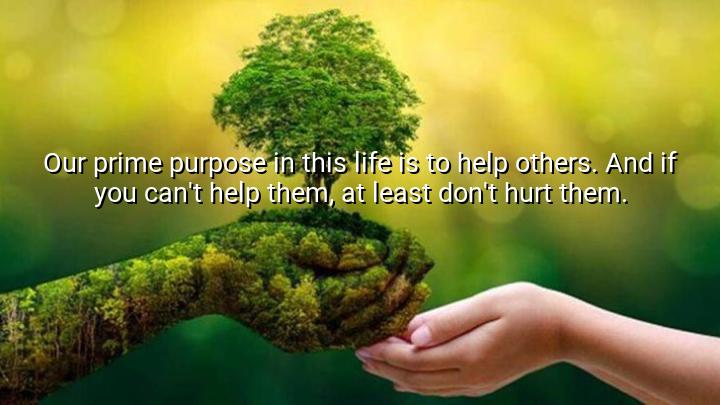




The quote "Our prime purpose in this life is to help others. And if you can't help them, at least don't hurt them" by the Dalai Lama offers a profound insight into the ethical and spiritual principles that guide human behavior. At its core, the quote emphasizes that the primary purpose of human life is to serve and support others, promoting a sense of compassion and altruism. The Dalai Lama, as a prominent leader of Tibetan Buddhism, often teaches about the importance of compassion, kindness, and reducing the suffering of others, making this message central to his philosophy.
The second part of the quote, "And if you can't help them, at least don't hurt them," serves as a gentle reminder that even if one cannot directly contribute to another person's well-being, they should avoid causing harm. This reflects a core Buddhist teaching of non-harming (ahimsa)—the idea that one should act in ways that prevent inflicting suffering on others. It suggests that even in situations where we feel powerless to help, we can still choose to act with compassion by refraining from causing harm through words, actions, or thoughts.
The Dalai Lama's words also promote a sense of personal responsibility and awareness of our impact on others. By emphasizing the importance of helping and not hurting, he calls for a conscious effort to contribute positively to the world around us, however we can, and to be mindful of the consequences of our actions. The simple but profound message encourages people to take a step back and evaluate how their actions, even those that seem small, can either uplift or harm others.
Originating from a spiritual leader who has spent his life advocating for peace, compassion, and nonviolence, this quote encapsulates the essence of the Dalai Lama's teachings. It encourages individuals to focus on kindness and understanding, fostering a world where the collective well-being of others is a priority. In a world often marked by conflict and divisiveness, his words offer a universal reminder of how we can all make a difference—either through active service or by simply choosing to avoid harm.

AAdministratorAdministrator
Welcome, honored guests. Please leave a comment, we will respond soon