

Our most basic common link is that we all inhabit this planet. We all breathe the same air. We all cherish our children's future. And we are all mortal.
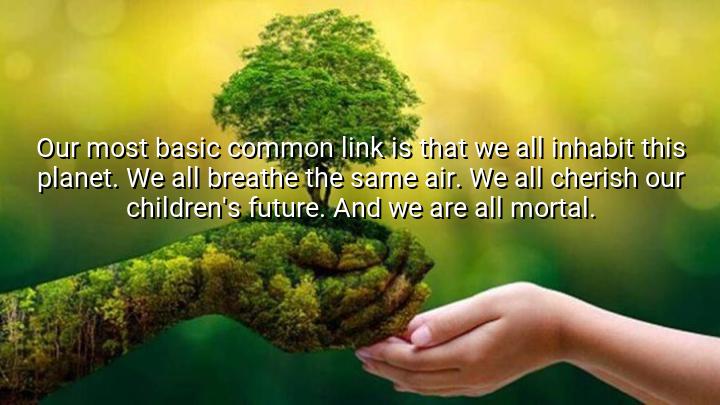




John F. Kennedy’s quote highlights the shared humanity that connects all people, regardless of their differences. By saying, “Our most basic common link is that we all inhabit this planet,” he emphasizes that despite cultural, national, or ideological divides, we all share a fundamental connection through our existence on Earth. This statement serves as a reminder of the global unity that should bring people together, focusing on the things that unite us rather than the things that divide us.
The next part of the quote, “We all breathe the same air,” further emphasizes this universal connection. It suggests that no matter where we come from, we all share the same environment and rely on the same resources to live. It’s a call for awareness about our collective impact on the planet and the responsibility we have to preserve it for future generations.
Kennedy then touches on the deep and universal desire to cherish our children's future, pointing out that this is a shared concern across cultures. Every society strives to create a better world for the next generation, reflecting the innate human instinct to care for the well-being and future of our children. This idea of legacy and protection transcends boundaries and is something that unites humanity in its collective vision for a better future.
Lastly, by stating, “And we are all mortal,” Kennedy acknowledges the inevitable nature of death, reminding us that our time on Earth is limited. This mortality unites all people, regardless of their background or accomplishments, and emphasizes the fragility of life. Together, these reflections encourage a sense of solidarity and responsibility, urging people to focus on the common good, take care of the planet, and ensure a better future for generations to come.

AAdministratorAdministrator
Welcome, honored guests. Please leave a comment, we will respond soon