

Our intentions may be very good, but, because the intelligence is limited, the action may turn out to be a mistake - a mistake, but not necessarily a sin, for sin comes out of a wrong intention.
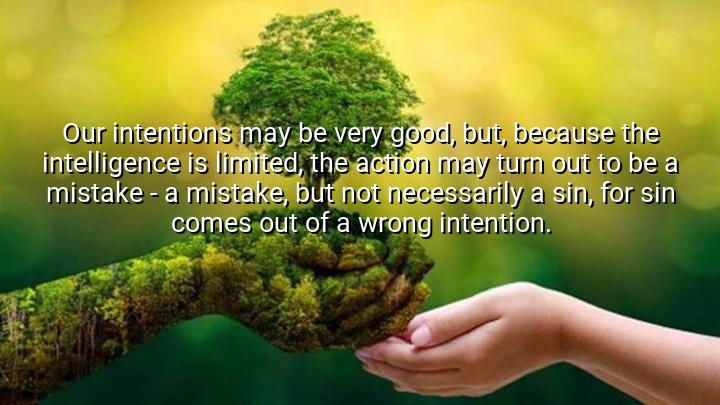




E. Stanley Jones’s quote, "Our intentions may be very good, but, because the intelligence is limited, the action may turn out to be a mistake - a mistake, but not necessarily a sin, for sin comes out of a wrong intention," reflects on the complexity of human actions and their motivations. Jones suggests that even when people have the best intentions, their limited intelligence or understanding can still lead them to make mistakes. This emphasizes that good intentions alone don’t guarantee the right outcome, as the results depend on both our intent and the intelligence behind our actions.
The distinction between mistake and sin is a key aspect of the quote. Jones asserts that while mistakes can occur even with good intentions, sin is different because it arises from wrong intentions. A mistake may be an unfortunate outcome of human limitation or error, whereas sin involves a deeper moral failing where the intent itself is misguided or malicious. This suggests a moral framework in which mistakes are forgivable or excusable, while sin reflects a deeper ethical wrong.
Jones’s words also highlight the importance of self-awareness and the recognition that humans are fallible. While we strive to do good, our intelligence and understanding are not perfect, and we may unknowingly make poor decisions. This encourages humility and a sense of compassion toward others who may make mistakes, as long as their intentions remain pure and their actions are not driven by malice.
The origin of the quote comes from E. Stanley Jones, a prominent Christian missionary and theologian known for his work in India. His teachings often explored the relationship between human action, morality, and spirituality, reflecting on how people can navigate life’s challenges with good intentions despite their inherent limitations. This quote encapsulates his perspective on the human struggle to balance good intentions with the reality of imperfect action.

AAdministratorAdministrator
Welcome, honored guests. Please leave a comment, we will respond soon