

Our children are the living messages we send to a future we will ever see... Will we rob them of their destiny? Will we rob them of their dreams? No - we will not do that.
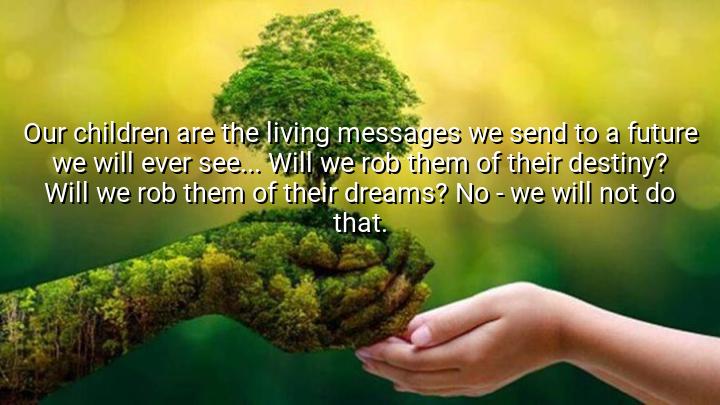




Elijah Cummings' quote reflects on the profound responsibility that parents and society have in shaping the future through the well-being and opportunities provided to children. He likens children to the “living messages” sent to a future we will never experience, suggesting that the values, education, and actions we impart to them have lasting effects that extend far beyond our own lifetimes. This imagery highlights the idea that children carry forward the legacy of the present generation into the future.
Cummings then poses powerful questions: “Will we rob them of their destiny?” and “Will we rob them of their dreams?” These questions challenge society to reflect on how we treat and nurture our children. He asks us to consider whether we are hindering their potential through neglect, injustice, or lack of opportunity, and whether we are denying them the chance to realize their fullest dreams and destiny. These questions underscore the ethical responsibility we have toward future generations.
The statement “No - we will not do that” represents a call to action and a promise to empower children, to give them the tools they need to shape their own futures. Cummings is rejecting the idea of limiting their potential and reaffirming the commitment to providing them with the best possible opportunities. His words inspire a collective determination to uplift children and ensure that they are not deprived of their rightful chance to succeed.
Ultimately, this quote emphasizes the intergenerational connection between past, present, and future, and the importance of ensuring that our actions today contribute positively to the lives of those who will inherit the world we leave behind. It serves as both a warning and a hopeful challenge to ensure that the coming generations are not denied their opportunities for growth, fulfillment, and success.

AAdministratorAdministrator
Welcome, honored guests. Please leave a comment, we will respond soon