

Only three per cent of people are born with a disability; the rest acquire it through accident or illness, but people come out of it. Thanks to medical advances, bodies heal.
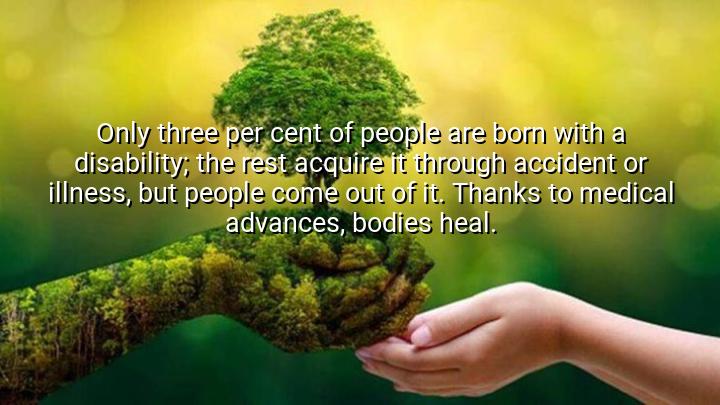




In this quote, Esther McVey highlights the statistics regarding disability and its prevalence. She points out that only a small percentage of people—three per cent—are born with a disability, while the majority acquire it later in life due to accident or illness. This distinction emphasizes that disabilities are not necessarily lifelong for everyone and that many individuals face temporary or acquired conditions that can be overcome.
McVey’s statement also focuses on the role of medical advances in helping the body heal after an injury or illness. She stresses the importance of modern healthcare and technology in improving the recovery process, allowing people to regain physical abilities or adapt to changes in their health. The idea that bodies heal reflects a positive outlook on the potential for recovery and rehabilitation, suggesting that medical progress has made it possible for many people to regain their independence.
The quote carries an underlying message of hope and resilience, emphasizing that disability does not define a person’s life. It suggests that through medical treatment, physical therapy, and innovation, those who acquire a disability can overcome challenges and improve their quality of life. McVey underscores the notion that with the right medical support, people can adapt and recover, highlighting the progress humanity has made in terms of treatment and care.
Overall, McVey's quote serves as a reminder of the transformative power of modern medicine and the ability of the human body to recover. It encourages a mindset of optimism and resilience, recognizing that disabilities are often not permanent and that healing is possible thanks to continued advancements in healthcare.

AAdministratorAdministrator
Welcome, honored guests. Please leave a comment, we will respond soon