

One of the things we often miss in succession planning is that it should be gradual and thoughtful, with lots of sharing of information and knowledge and perspective, so that it's almost a non-event when it happens.
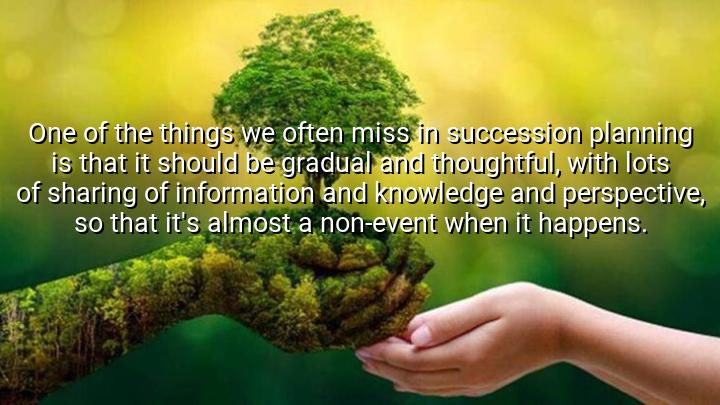




The quote, “One of the things we often miss in succession planning is that it should be gradual and thoughtful, with lots of sharing of information and knowledge and perspective, so that it's almost a non-event when it happens,” is attributed to Anne M. Mulcahy, the former CEO and chairperson of Xerox Corporation. Mulcahy is widely respected for successfully leading Xerox through a period of crisis in the early 2000s, and her leadership insights often focused on people, transition, and organizational stability. This statement reflects her belief that effective succession planning requires foresight, transparency, and collaboration rather than abrupt change.
The first part, “succession planning… should be gradual and thoughtful,” stresses the need for careful preparation when transferring leadership. Mulcahy emphasizes that a transition should not come as a surprise but should unfold naturally over time. A gradual approach ensures that the incoming leader is prepared and the organization remains stable.
The second part, “with lots of sharing of information and knowledge and perspective,” highlights the importance of communication and mentoring. For Mulcahy, succession is not just about choosing the next leader but also equipping them with the knowledge and insights gained from experience. This transfer of wisdom ensures continuity of vision and prevents disruption.
Ultimately, Mulcahy’s statement shows that the goal of good succession planning is to make the change feel seamless—“almost a non-event.” By embedding preparation, learning, and collaboration into the process, organizations can avoid chaos and maintain trust. Her insight reflects her broader philosophy that leadership transitions should strengthen, not destabilize, the long-term success of a company.

AAdministratorAdministrator
Welcome, honored guests. Please leave a comment, we will respond soon