

One of the luckiest things that can happen to you in life is, I think, to have a happy childhood.
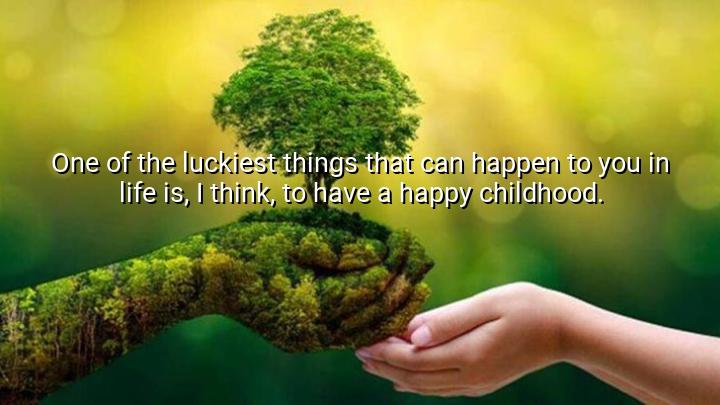




The quote by Agatha Christie, “One of the luckiest things that can happen to you in life is, I think, to have a happy childhood,” emphasizes the importance of early life experiences in shaping a person’s overall well-being and happiness. Christie highlights that a joyful and nurturing childhood can provide a strong foundation for emotional stability, confidence, and resilience later in life. The quote suggests that the benefits of a happy childhood extend far beyond childhood itself, influencing personal growth and lifelong outlook.
The origin of this quote comes from Agatha Christie, the renowned British author and playwright, best known for her mystery novels featuring characters like Hercule Poirot and Miss Marple. Christie often drew upon her own life experiences and observations of human behavior in her writing, reflecting on how early experiences impact personality, creativity, and emotional development. This statement offers a glimpse into her personal appreciation for the value of a secure and joyful upbringing.
At its core, the quote underscores the long-term impact of childhood experiences. By calling a happy childhood one of life’s luckiest events, Christie suggests that early joy, love, and security equip individuals with the tools to navigate life’s challenges and uncertainties more effectively. It emphasizes the role of family, environment, and formative experiences in shaping a person’s future.
Ultimately, Agatha Christie’s statement serves as a reminder of the profound importance of nurturing childhood experiences. It encourages caregivers and society at large to prioritize the well-being, happiness, and emotional growth of children, recognizing that a joyful and supportive start in life can have lasting positive effects on an individual’s happiness, resilience, and personal fulfillment.

AAdministratorAdministrator
Welcome, honored guests. Please leave a comment, we will respond soon