

One of my beliefs about leadership is it's not how many followers you have, but how many people you have with different opinions that you can bring together and try to be a good listener.
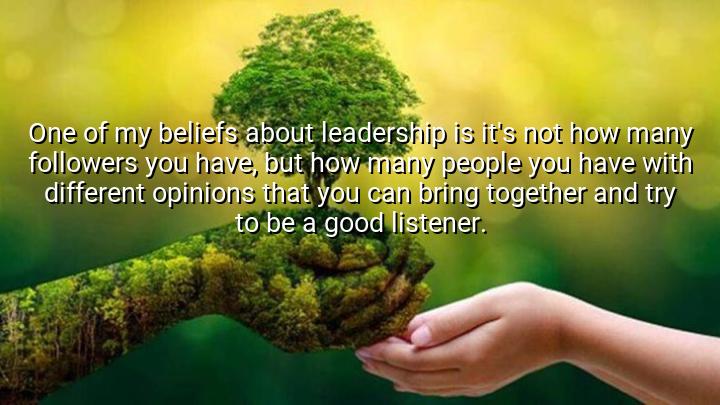




The quote "One of my beliefs about leadership is it's not how many followers you have, but how many people you have with different opinions that you can bring together and try to be a good listener" by Robert Kraft emphasizes that effective leadership is defined not by popularity or the number of followers, but by the ability to unite diverse perspectives. Kraft, an American businessman and owner of the New England Patriots, highlights that a strong leader values collaboration, inclusivity, and active listening, creating an environment where different ideas are respected and synthesized for the greater good.
The origin of this quote comes from Kraft’s experience in sports management and business, where success often depends on bringing together individuals with varied skills, backgrounds, and viewpoints. He observed that leaders who can listen and integrate diverse opinions make more informed decisions and foster stronger team cohesion and innovation, rather than relying solely on authority or popularity.
The deeper meaning of the quote underscores that leadership is relational and facilitative. True leaders are not simply commanders or figureheads; they are skilled at engaging with differing perspectives, understanding the needs and insights of their team, and guiding discussions toward constructive outcomes. Kraft’s statement highlights that listening and inclusivity are essential tools for creating trust, collaboration, and collective success.
In modern contexts, this quote resonates in corporate leadership, politics, education, and community organizing, reminding leaders that influence is measured by their ability to bridge differences and encourage dialogue. Kraft’s insight teaches that respecting diverse opinions and being an attentive listener not only strengthens teams but also enhances the quality of decisions and the resilience of organizations, making leadership both effective and sustainable.

AAdministratorAdministrator
Welcome, honored guests. Please leave a comment, we will respond soon