

One man's trash is another man's treasure, and the by-product from one food can be perfect for making another.
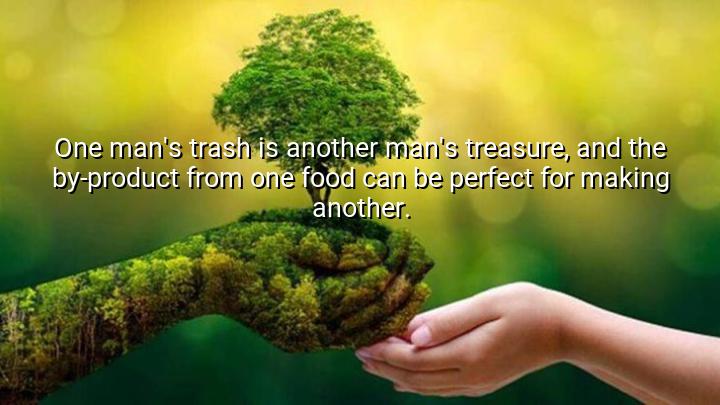




The quote "One man's trash is another man's treasure, and the by-product from one food can be perfect for making another" by Yotam Ottolenghi explores themes of value, resourcefulness, and perspective—especially within the context of cooking and sustainability. Ottolenghi, a celebrated chef and food writer, uses this metaphor to highlight how what may seem useless or discardable in one context can become valuable in another. This is not only a culinary philosophy but also a broader commentary on waste and creativity.
The first part of the quote—"One man's trash is another man's treasure"—is a well-known proverb that predates Ottolenghi, expressing the idea that value is subjective. What someone considers worthless, another may see as useful, beautiful, or desirable. Ottolenghi extends this notion into the realm of food, suggesting that kitchen scraps or by-products—like stems, peels, or bones—can have unexpected culinary applications when viewed with imagination.
In the second part of the quote, he emphasizes how sustainable cooking can be both practical and delicious. For example, vegetable trimmings can become broth, or leftover bread can be turned into croutons or pudding. This mindset promotes minimizing waste and encourages cooks to see the potential in every part of an ingredient, not just the conventionally prized portions.
Ultimately, Ottolenghi's quote reflects a philosophy of appreciation and efficiency—finding opportunity where others see waste. It’s a call to reexamine our habits, both in the kitchen and beyond, and to embrace a mindset where creativity and sustainability go hand in hand.

AAdministratorAdministrator
Welcome, honored guests. Please leave a comment, we will respond soon