

Once we know of atrocities we cannot remain silent, and knowledge inevitably leads to an urge to protect the innocent.
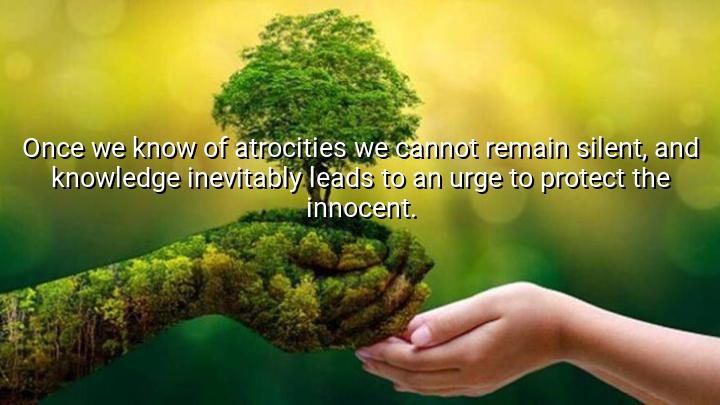




Azar Nafisi’s quote emphasizes the moral responsibility that comes with knowledge of atrocities. She suggests that once we are aware of the suffering and injustices faced by others, particularly the innocent, we cannot remain indifferent or silent. This awareness compels us to act, to take a stand, and to protect those who are vulnerable. Nafisi is highlighting the ethical obligation to respond to human suffering, especially when it is brought to our attention.
The quote underscores the idea that knowledge is not passive but inherently leads to an urge to protect. This urge is tied to a deeper sense of compassion and humanity—when we understand the pain and injustice that others experience, we are driven by a moral imperative to help. Nafisi's words reflect the notion that ignorance can often allow atrocities to persist, while awareness brings an increased moral duty to intervene and prevent further harm.
In the broader context of Nafisi's work, particularly her memoir Reading Lolita in Tehran, this quote speaks to the role of literature and education in awakening individuals to the atrocities and human rights violations that occur in oppressive regimes. Nafisi, an Iranian-American writer, uses her own experiences with censorship and oppression in Iran to argue that education and awareness are key to recognizing and confronting injustice.
The origin of this quote comes from Nafisi's broader reflections on human rights and the impact of literature in fostering a deeper understanding of the world’s problems. Nafisi’s work, which often explores the intersection of personal freedom and oppressive political systems, encourages individuals to confront the realities of injustice and to use their knowledge to make a difference. This quote reflects her commitment to activism and social justice, urging people to act once they are aware of the suffering around them.

AAdministratorAdministrator
Welcome, honored guests. Please leave a comment, we will respond soon