

Not one of us can rest, be happy, be at home, be at peace with ourselves, until we end hatred and division.
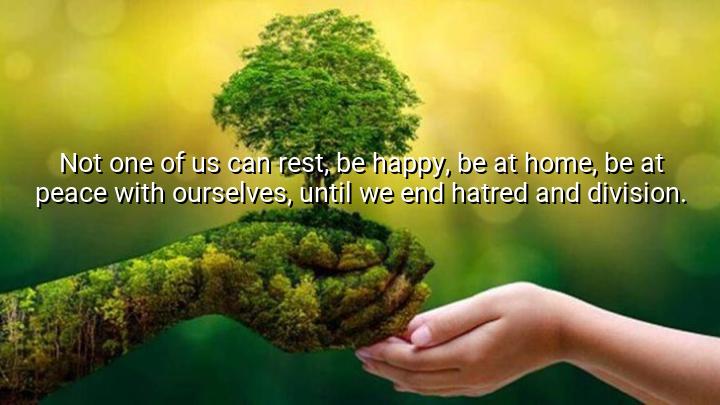




The quote "Not one of us can rest, be happy, be at home, be at peace with ourselves, until we end hatred and division" by John Lewis conveys the idea that true peace and happiness are unattainable unless we address the hatred and division that exist within society. Lewis, a prominent civil rights leader and congressman, highlights that the individual and collective well-being of people is inextricably linked to the elimination of societal divisions, whether they are based on race, religion, or other forms of discrimination. Only by unifying and fostering understanding can we find peace within ourselves and in our communities.
The origin of this quote comes from Lewis's lifelong fight for justice and equality. As a leader in the Civil Rights Movement, he witnessed firsthand the destructive consequences of hate and prejudice. His experiences, from participating in marches to facing physical violence, shaped his belief that societal progress hinges on overcoming polarization and promoting unity. This quote reflects his commitment to these values and his understanding that no one can be fully content in a world that is divided by hate.
In a broader sense, this quote speaks to the idea that personal peace is impossible in a world marked by conflict and discrimination. It suggests that peace is not just an individual pursuit but a collective responsibility, one that requires us to actively work toward ending injustice and embracing compassion. Until these barriers of division are dismantled, no one can truly experience a sense of belonging or inner peace, as we are all affected by the unrest around us.
Ultimately, John Lewis's words challenge us to examine our roles in perpetuating or combating division. His call to action emphasizes that real peace and happiness are achieved only when we choose to prioritize unity and love over hate, recognizing that our individual well-being is tied to the collective health of society.

AAdministratorAdministrator
Welcome, honored guests. Please leave a comment, we will respond soon