

No power in society, no hardship in your condition can depress you, keep you down, in knowledge, power, virtue, influence, but by your own consent.
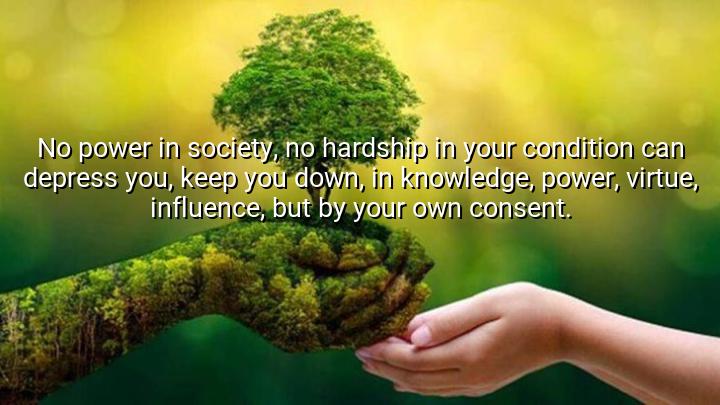




The quote by William Ellery Channing emphasizes the role of personal agency in the pursuit of knowledge, power, virtue, and influence. Channing argues that external circumstances, whether hardship or societal pressures, cannot truly limit a person’s growth unless they allow it. True limitation comes not from the environment but from one’s own lack of determination or consent to be held back.
Channing highlights the idea that internal strength and resilience are essential to maintaining and expanding one’s knowledge and moral capacity. Even in difficult conditions, individuals can continue to learn, act virtuously, and wield influence if they refuse to be discouraged. This perspective celebrates self-discipline, responsibility, and the power of choice.
The quote also underscores the distinction between external and internal obstacles. While society or circumstances may create challenges, they are only effective if one permits them to obstruct progress. By exercising agency and commitment, individuals can transcend adversity and continue cultivating their virtue, understanding, and impact.
Originating from William Ellery Channing, an American Unitarian preacher and advocate of individual moral responsibility, the quote reflects his philosophical and ethical beliefs. Channing emphasizes that personal empowerment and the pursuit of knowledge and virtue are ultimately within the control of the individual, highlighting the enduring importance of self-determination.

AAdministratorAdministrator
Welcome, honored guests. Please leave a comment, we will respond soon