

No one has a right to consume happiness without producing it.
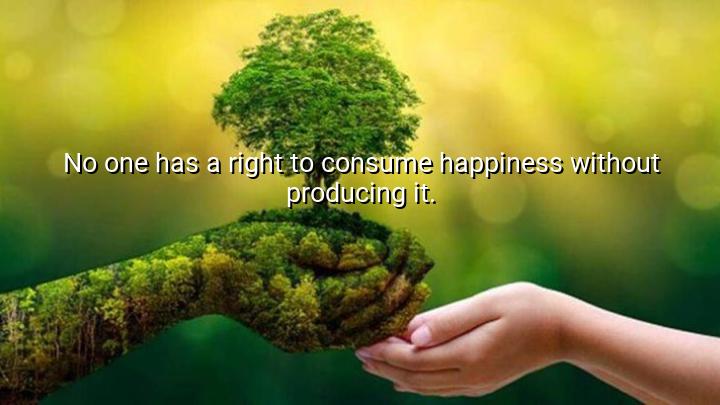




The quote by Helen Keller, "No one has a right to consume happiness without producing it," suggests that true happiness is not something that can be passively received or taken for granted. Keller emphasizes that in order to experience happiness, one must also contribute to the well-being and happiness of others. The idea of "producing" happiness implies that it involves effort, intention, and a positive contribution to the world around us, rather than simply seeking pleasure or satisfaction without offering anything in return.
Keller’s words highlight the reciprocal nature of happiness. She believes that happiness should not be a one-sided pursuit but something that flows both ways. When individuals take responsibility for creating joy, whether through kindness, compassion, or hard work, they foster a more fulfilling and meaningful experience for themselves and others. The quote calls for individuals to live with a sense of purpose and generosity, ensuring that their pursuit of happiness contributes to the greater good.
The message also speaks to personal responsibility. Keller implies that happiness is not an entitlement but a quality that must be earned through positive actions. This challenges the notion that happiness is something that can be taken or demanded without effort. By framing happiness as something that must be produced, Keller encourages people to take an active role in creating the conditions for their own happiness and the happiness of those around them.
The origin of this quote is rooted in Helen Keller’s life and philosophy, shaped by her experiences as a blind and deaf individual who overcame significant challenges. Despite her disabilities, Keller became a powerful advocate for social justice, education, and the rights of marginalized communities. This quote reflects her belief in the value of hard work, service to others, and the importance of personal growth in achieving true happiness. Through her own example, Keller showed that happiness, resilience, and fulfillment are often the result of one's efforts to contribute positively to the world.

AAdministratorAdministrator
Welcome, honored guests. Please leave a comment, we will respond soon