

No man is happy without a delusion of some kind. Delusions are as necessary to our happiness as realities.
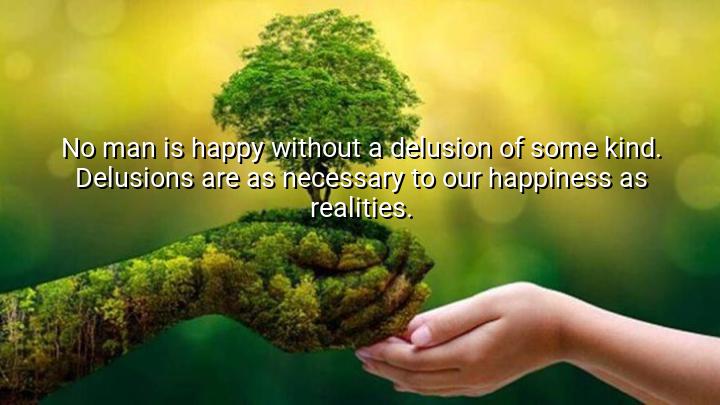




The quote "No man is happy without a delusion of some kind. Delusions are as necessary to our happiness as realities" by Christian Nestell Bovee explores the idea that some level of illusion or false belief is essential for emotional well-being. Bovee suggests that people need something to believe in, even if it isn't entirely grounded in reality, in order to experience true happiness. Delusions, whether they are hopes, ideals, or dreams, provide individuals with a sense of purpose and fulfillment that might not always be possible through pragmatic or realistic thinking alone.
Christian Nestell Bovee, an American writer and philosopher known for his work in the 19th century, was interested in human nature and the complexities of the human psyche. This quote reflects his belief in the importance of optimism and hope, even if they aren't always based on hard facts. Bovee suggests that these "delusions" can act as emotional shields or motivators, helping individuals push through difficult times and find meaning in life.
The idea of delusion as necessary to happiness challenges the traditional notion that happiness comes only through truth and rationality. Bovee’s view implies that a certain amount of idealism or faith in something beyond immediate reality is vital for mental well-being. These beliefs, even if imperfect or unverifiable, help people maintain a positive outlook and cope with life’s challenges.
In essence, Bovee’s quote invites reflection on the role of beliefs—whether they are grounded in reality or not—in shaping our happiness. He implies that the human mind often seeks comfort in illusion, and these delusions, much like realities, contribute to an individual's overall sense of joy and satisfaction. Without them, life might feel overwhelming or devoid of meaning.

AAdministratorAdministrator
Welcome, honored guests. Please leave a comment, we will respond soon