

Nature shows that with the growth of intelligence comes increased capacity for pain, and it is only with the highest degree of intelligence that suffering reaches its supreme point.
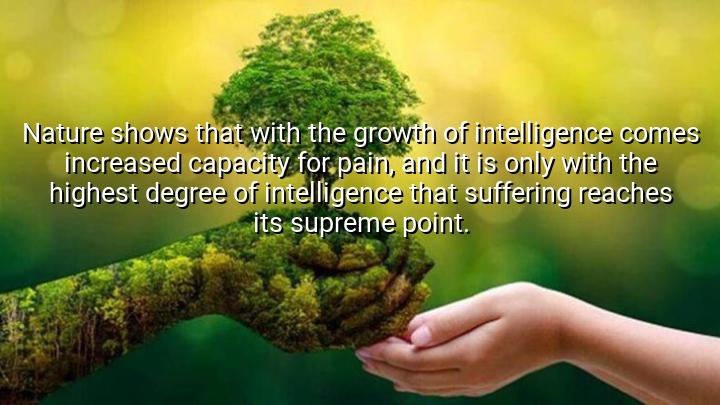




In this quote, Arthur Schopenhauer presents a view on the relationship between intelligence and pain. He argues that as intelligence increases, so does the capacity for suffering, suggesting that a higher level of awareness brings with it a greater understanding of life's difficulties and limitations. Schopenhauer believes that those with the most advanced intellectual abilities are more acutely aware of the suffering in the world, and this heightened awareness makes their experience of pain more profound and intense.
Schopenhauer’s statement touches on a philosophical perspective that links human consciousness and suffering. According to him, the higher degree of intelligence not only allows individuals to understand complex aspects of existence but also exposes them to deeper emotional and psychological suffering. This perspective reflects Schopenhauer’s broader pessimistic philosophy, which suggests that life is inherently filled with struggle and pain, and that happiness is fleeting and often elusive, especially for those who possess greater understanding.
The origin of this quote comes from Arthur Schopenhauer, a German philosopher known for his works on metaphysics, ethics, and the nature of human existence. Schopenhauer’s philosophy was heavily influenced by Eastern philosophy and his own experience of the harshness of life. He often explored the idea that human beings are trapped in a cycle of desire and suffering, with the intellect sometimes making this cycle even more difficult to bear.
In essence, Schopenhauer’s quote suggests that intelligence has a dual nature—while it can lead to greater understanding and insight, it can also deepen one’s experience of pain and suffering. This paradox highlights the tension between knowledge and happiness, suggesting that awareness of the world’s inherent struggles can make those struggles feel more unbearable. It encourages a contemplation of the role of awareness and intellect in shaping our emotional experiences.

AAdministratorAdministrator
Welcome, honored guests. Please leave a comment, we will respond soon