

My passion and great enjoyment for architecture, and the reason the older I get the more I enjoy it, is because I believe we - architects - can effect the quality of life of the people.
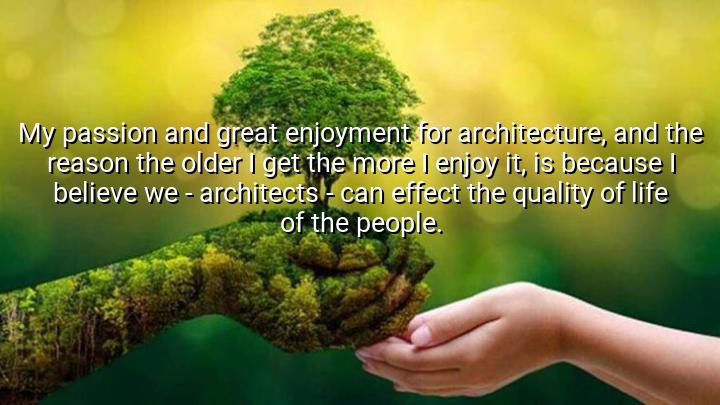




The quote by Richard Rogers, “My passion and great enjoyment for architecture...,” reflects his deep belief in the social impact of architecture. For Rogers, architecture is not merely about designing buildings—it is about shaping the quality of life for the people who use and inhabit them. His passion grows stronger with age because he recognizes that thoughtful design can foster community, well-being, and a sense of belonging.
Rogers emphasizes that architects hold a unique responsibility: their work influences how people live, move, and connect within urban environments. From the layout of a public square to the flow of a building, design decisions affect everything from comfort and safety to social interaction. He saw architecture as a powerful tool for positive change, capable of addressing societal needs and improving everyday experiences.
This philosophy is evident in many of Rogers’ iconic works, such as the Pompidou Centre in Paris and the Lloyd’s Building in London. These structures are known for their transparency, accessibility, and innovative use of space—demonstrating his commitment to public engagement and human-centered design. He consistently aimed to create spaces that were not only functional but also inspiring and inclusive.
Ultimately, Rogers’ quote captures the idea that architecture is about more than aesthetics or construction—it’s about people. His lifelong dedication to designing for society explains why his enthusiasm only deepened over time. For him, each project was an opportunity to enhance lives, support sustainability, and build a better, more connected world.

LNLe Nhung
It’s heartening to see an architect talk about aging and deepening appreciation for their craft. I wonder—does that kind of wisdom come only with years of experience? Maybe younger architects focus more on aesthetics or trends, while seasoned professionals see the broader societal implications. Do you think architectural education does enough to instill this sense of purpose and social responsibility from the beginning?
TNThuong Nguyen
This quote reminds me why architecture is such a powerful profession. When done well, it truly does shape how people feel, move, and connect with each other. But it also makes me reflect on how many urban spaces fail to support well-being—poor lighting, lack of green space, overcrowded housing. Do you think enough architects approach their work with this kind of responsibility and long-term impact in mind?
MManh
Rogers’ passion really comes through here, and I respect that. But I wonder if architects always have enough influence to impact people’s lives the way he describes. Aren’t they often limited by developers, budgets, zoning laws, and politics? It’s a noble goal, but how realistic is it in practice? I’d love to hear examples where an architect overcame those challenges to genuinely uplift a community.
TDNguyen Tuan Duong
This is such a hopeful perspective, and I find it inspiring. But I’m curious—how exactly do architects measure ‘quality of life’? Is it about beauty, comfort, accessibility, sustainability, or something else entirely? I feel like different people value different things in a space. Do you think it’s possible for architects to design spaces that meaningfully improve life for everyone, or does it always involve trade-offs?
TTLuong Thi Thanh Trang
I love how this quote highlights the human-centered side of architecture. It's not just about buildings, but about people and how they live. But it makes me wonder—do all architects truly see their work this way, or is this more of an ideal than a reality? With so many buildings focused on profit or aesthetics alone, how often is quality of life really prioritized in the design process?