

My mum's amazing. She's the person I admire most, I think, in her sacrifice to me and my sister and her level of emotional sacrifice to people around her. She takes a high level of personal responsibility for the welfare of people around her.
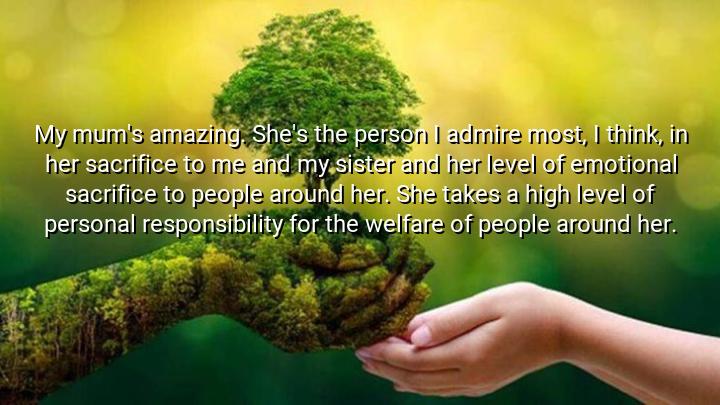




This quote by Jon Richardson, a British comedian and television personality, is a heartfelt tribute to his mother and the profound impact she’s had on his life. When he says, “My mum’s amazing,” he’s acknowledging not just her love, but her extraordinary capacity for selflessness and devotion. He highlights her role in raising him and his sister, emphasizing the sacrifice she made for their well-being and happiness.
Richardson goes further to describe his mother’s “level of emotional sacrifice,” pointing out that her compassion extends beyond her immediate family. Her deep empathy and willingness to put others' needs before her own speak to a strong sense of personal responsibility. She doesn’t just care—she actively takes on the burden of ensuring others are okay, something he clearly finds admirable and inspiring.
The origin of this quote likely comes from interviews or personal reflections in which Richardson was asked about the people who shaped him. Known for his thoughtful and often introspective humor, Richardson frequently explores themes of family, anxiety, and relationships in both his stand-up and public appearances, making this tribute to his mother particularly sincere and consistent with his public persona.
Ultimately, this quote is more than a compliment—it’s a recognition of emotional labor and the quiet, often overlooked strength of maternal care. Richardson’s words honor not just his mum’s actions, but her character, showing how her amazing dedication has shaped his values and perspective on responsibility, love, and connection.

Y-40-Nguyen Thi Nhu Y -11A9
Reading this actually made me reflect on my own parents. Sometimes we get so caught up in our routines that we forget to acknowledge these deep, lifelong sacrifices. I wonder how often people tell their parents just how much they’re appreciated. Jon’s words are a reminder to give those we love their flowers while they’re still here.
DHDuong Hai
I’m curious—how do you even begin to repay someone for that kind of emotional investment? Jon talks about admiration, but I’d like to know how that admiration translates into action. Does he mirror that kind of responsibility in his own relationships? Does he try to ease the burden his mum once carried, or is that impossible in a way?
N5Nguyen Ngoc Khanh Nhi 55
There’s such beauty in this reflection, but it also raises an interesting point: are women, especially mothers, often expected to take on this level of emotional responsibility? Jon clearly admires it, and rightly so, but I wonder how much of it was her own choice versus what society placed on her. Can emotional labor like this ever truly be equitable within families?
BVba vu
This makes me think about how many everyday heroes—especially mothers—quietly give so much of themselves without ever seeking recognition. I’d love to know more about what specific acts or moments shaped Jon’s admiration. Was there a defining time when her sacrifices really became clear to him? And how does that affect how he shows up for others now in his own life?
LlINH
It’s incredibly touching to hear someone speak about their mother with such heartfelt admiration. Jon’s recognition of emotional sacrifice is powerful—it’s often overlooked compared to more visible acts of care. But I do wonder, is it always healthy for someone to feel responsible for everyone else’s wellbeing? At what point does selflessness cross into self-neglect? It's something I think many caregivers struggle with silently.