

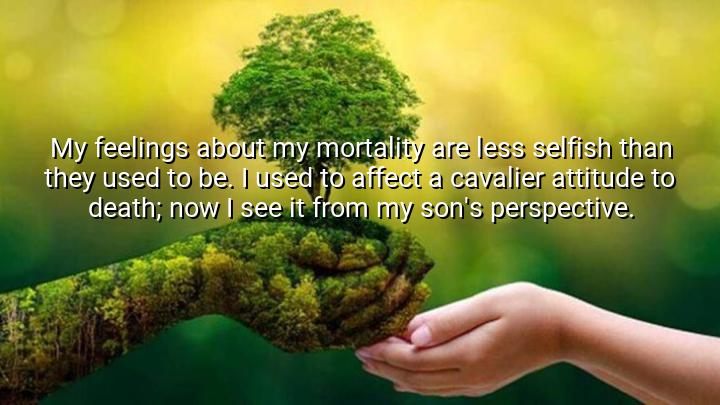
My feelings about my mortality are less selfish than they used to be. I used to affect a cavalier attitude to death; now I see it from my son's perspective.




Certainly! Here’s an explanation of the quote by Rufus Sewell with bolded keywords:
This quote reflects Rufus Sewell’s evolving feelings about his own mortality. He acknowledges a shift from a once cavalier attitude—a casual or indifferent approach toward death—to a more thoughtful and empathetic perspective. This change is influenced by seeing death through the eyes of his son, which brings a deeper emotional awareness and sensitivity.
Sewell’s words suggest that as people grow and take on new roles, such as parenthood, their views on life and death become more complex and less self-centered. Understanding mortality from his child’s point of view makes the reality of death more profound and personal, fostering greater humility and care.
The origin of this quote comes from Sewell’s reflections as an actor and father, offering insight into how personal experiences shape one’s attitude toward universal themes like life, death, and family. His perspective reveals how close relationships can transform one’s outlook on difficult topics.
In essence, the quote highlights the importance of empathy and evolving awareness in facing mortality, showing that becoming a parent can profoundly alter how we think about life’s most inevitable truth.
Would you like me to expand on Sewell’s personal life or keep it focused on the quote’s meaning?

AAdministratorAdministrator
Welcome, honored guests. Please leave a comment, we will respond soon