

My architecture is the architecture of survival.
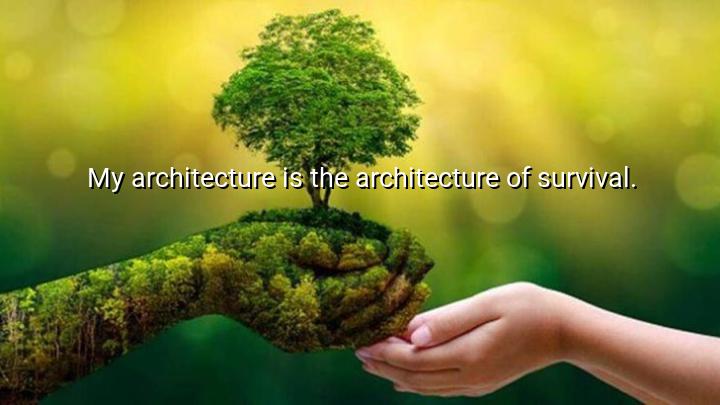




The quote "My architecture is the architecture of survival" by Frei Otto encapsulates his philosophy of designing buildings that respond to basic human needs and environmental challenges. For Otto, architecture was not about grandeur or excess, but about necessity, efficiency, and resilience. His work prioritized lightweight structures, minimal material use, and harmony with nature — all vital for creating spaces that support long-term human survival.
Frei Otto, a German architect and structural engineer, became internationally known for his tensile structures and biomimetic designs — forms inspired by natural systems like spider webs and soap films. His approach emerged in post-World War II Germany, where scarcity of resources demanded innovative and sustainable construction methods. The notion of “survival” reflected not only environmental awareness but also social responsibility, focusing on providing shelter that was accessible, adaptable, and ecologically sound.
The quote highlights Otto’s belief that architecture must address urgent global issues: climate change, resource scarcity, and population growth. Instead of imposing structures onto nature, he advocated for working with it — using passive design, natural ventilation, and solar orientation to reduce energy consumption. His designs, such as the Munich Olympic Stadium and his work in disaster relief housing, illustrate architecture as a life-sustaining practice.
Ultimately, Otto’s "architecture of survival" is a call for sustainability, ethics, and innovation in the built environment. It challenges architects to go beyond aesthetics or commercial goals and instead design for the future of humanity and the planet. His legacy continues to influence contemporary eco-architects and reinforces the idea that architecture, at its core, must help people thrive — even in the harshest of conditions.

AAdministratorAdministrator
Welcome, honored guests. Please leave a comment, we will respond soon