

Music is the one incorporeal entrance into the higher world of knowledge which comprehends mankind but which mankind cannot comprehend.
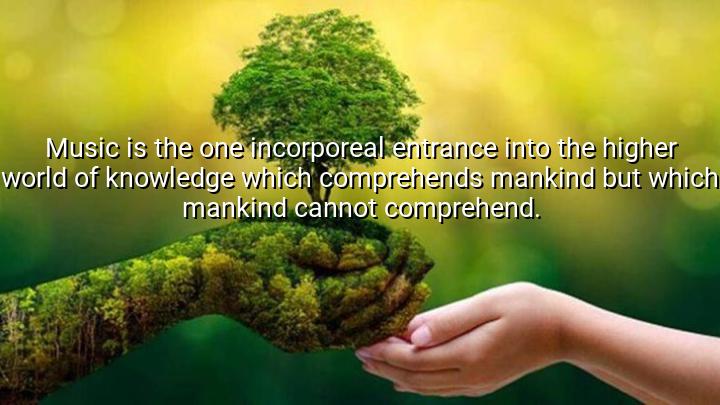




The quote by Ludwig van Beethoven highlights the transcendent power of music as a medium for accessing profound knowledge and universal truths. Beethoven describes music as an incorporeal entrance, meaning it is intangible and non-physical, yet it allows humans to connect with a higher realm of understanding that surpasses ordinary comprehension. This underscores his belief in music’s unique ability to communicate what words and logic cannot.
By stating that this higher world of knowledge “comprehends mankind but which mankind cannot comprehend,” Beethoven emphasizes the paradoxical nature of music: it resonates with human emotion and experience, shaping our understanding of the world, yet its full depth remains beyond our rational grasp. Music, in this sense, serves as a bridge between the finite human mind and the infinite mysteries of existence.
The origin of this quote reflects Beethoven’s lifelong engagement with composition and the emotional power of music. As one of history’s greatest composers, he consistently explored the ways in which musical expression could evoke deep spiritual and intellectual insight. His works often sought to transcend the limitations of ordinary perception, illustrating his belief in music as a vehicle for universal comprehension and emotional truth.
In essence, the quote celebrates music as a conduit to higher understanding, emphasizing its ability to move, teach, and connect humanity in ways that are beyond intellectual reasoning. Beethoven portrays music not merely as art or entertainment but as a profound, almost mystical, force that shapes human experience and insight.

AAdministratorAdministrator
Welcome, honored guests. Please leave a comment, we will respond soon